
Biology · Genetic technology
This chapter explores genetic technology, detailing techniques like genetic engineering, PCR, gel electrophoresis, and microarrays. It covers the tools used, such as restriction enzymes and vectors, and discusses applications in medicine and agriculture, alongside their significant social and ethical implications.
genetic engineering — Any procedure in which the genetic information in an organism is changed by altering the base sequence of a gene or by introducing a gene from another organism; the organism is then said to be a genetically modified organism (GMO).
Genetic engineering allows for targeted changes to an organism's DNA, often involving the transfer of a single gene between different species. Imagine editing a specific sentence in a book (the genome) to change a character's trait, rather than just picking the best existing books from a library.
Students often think genetic engineering is the same as selective breeding, but actually genetic engineering involves direct manipulation of DNA, often across species, while selective breeding relies on choosing individuals with desirable traits for reproduction.
genetically modified organism (GMO) — Any organism that has had its DNA changed in a way that does not occur naturally or by selective breeding.
GMOs are organisms whose genetic material has been altered using genetic engineering techniques. This alteration can involve adding, deleting, or changing genes to introduce new characteristics, such as disease resistance or enhanced growth. Think of a car that has been specifically engineered with a new engine or feature that wasn't part of its original design or a standard upgrade.
recombinant DNA (rDNA) — DNA made by artificially joining together pieces of DNA from two or more different species.
rDNA is a key product of genetic engineering, where a desired gene from one organism is combined with the DNA of a vector (like a plasmid) from another. This allows the gene to be introduced and expressed in a new host. Think of cutting a paragraph from one book and pasting it into another book, creating a new combined text.
Students often think rDNA is just any altered DNA, but actually it specifically refers to DNA constructed from two or more different sources, often different species.
transgenic organism — Any organism that contains DNA from another source, such as from another individual of the same species or from a different species.
A transgenic organism is a type of GMO that has incorporated foreign DNA into its genome. This foreign DNA can originate from the same species or a different one, leading to the expression of new traits. Like a computer program that has a new piece of code (DNA) added from a different program to give it a new function.
Use precise terminology. Refer to 'restriction endonucleases', 'vectors', 'recombinant DNA', and 'transgenic organisms' rather than vague terms like 'genetic scissors' or 'changed organism'.
Genetic engineering relies on a suite of molecular tools to manipulate DNA. These include enzymes for cutting and joining DNA, and vectors for delivering genes into host cells. Understanding these tools is fundamental to performing genetic modifications.
restriction endonuclease (restriction enzyme) — An enzyme, originally derived from bacteria, that cuts DNA molecules; each type of restriction enzyme cuts only at a particular sequence of bases.
Restriction enzymes are molecular 'scissors' that recognize specific palindromic sequences (restriction sites) on DNA and cleave the phosphodiester backbone. They are essential for cutting out desired genes and opening plasmid vectors, often creating 'sticky ends'. Like a very precise pair of scissors that only cuts paper at specific, pre-marked lines.
Students often think restriction enzymes cut DNA randomly, but actually each enzyme recognizes and cuts at a very specific base sequence.
Emphasize the 'specificity' of restriction enzymes – they cut at 'particular sequences of bases' or 'restriction sites' – as this is a key characteristic.
sticky ends — Short lengths of unpaired bases that form hydrogen bonds with complementary sequences of bases on other pieces of DNA cut with the same restriction enzyme.
Sticky ends are created by restriction enzymes that make staggered cuts in DNA, leaving overhangs of single-stranded DNA. These overhangs are crucial for genetic engineering as they allow DNA fragments from different sources, cut with the same enzyme, to anneal together. Like two pieces of a jigsaw puzzle that have complementary shapes, allowing them to fit together perfectly.
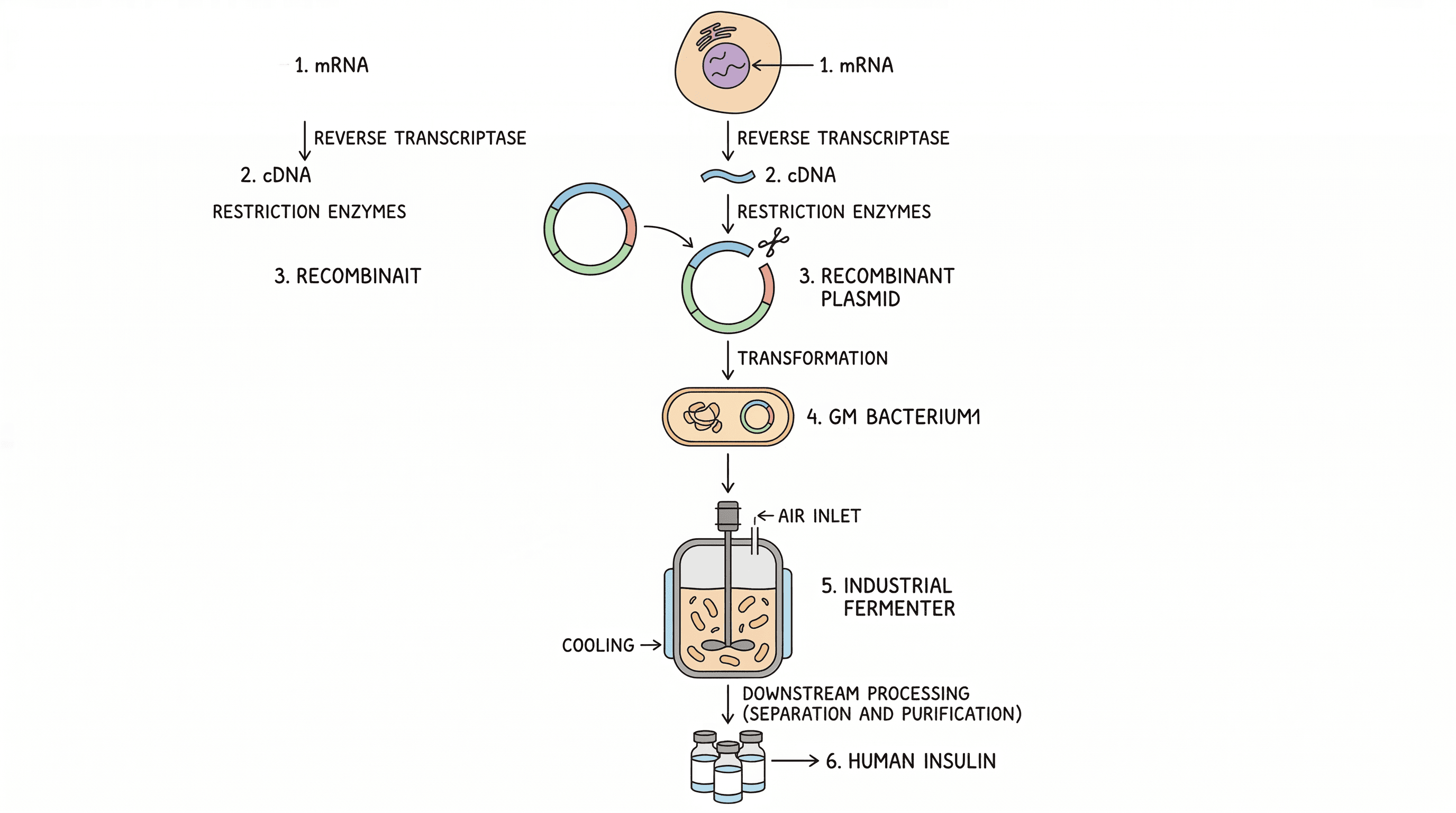
cDNA — Double-stranded complementary DNA formed from an mRNA template using reverse transcriptase and DNA polymerase.
cDNA is a DNA copy of an mRNA molecule, lacking introns because it's synthesized from processed mRNA. This makes it particularly useful in genetic engineering for expressing eukaryotic genes in prokaryotic hosts, which cannot splice introns. Imagine making a clean, edited transcript (cDNA) from a raw recording (mRNA) that already had all the irrelevant parts (introns) removed.
Highlight that cDNA is derived from mRNA and thus lacks introns, which is a key advantage when expressing eukaryotic genes in bacteria.
vector — A means of delivering genes into a cell used in gene technology; e.g. plasmids and viruses.
Vectors are crucial tools in genetic engineering, acting as carriers to transport desired genes into host cells. Plasmids and viruses are commonly used because they can naturally enter cells and integrate genetic material. Think of a delivery truck (the vector) carrying a package (the gene) to a specific house (the cell).
When asked for examples of vectors, always include both plasmids and viruses, as they are the most common and distinct types.
promoter — A length of DNA that includes the binding site for RNA polymerase where transcription of a gene or genes begins; in eukaryotes, promoters also have sites for binding of transcription factors.
Promoters are regulatory DNA sequences located upstream of a gene that control its expression. RNA polymerase binds to the promoter to initiate transcription, and in eukaryotes, transcription factors are also required to facilitate this binding and regulate gene activity. Like the 'on/off' switch and 'start' button for a machine (the gene), determining when and where it begins to operate.
Remember to mention the role of a promoter. A gene inserted into a vector will not be expressed unless it is placed after a suitable promoter sequence that allows RNA polymerase to bind and begin transcription.
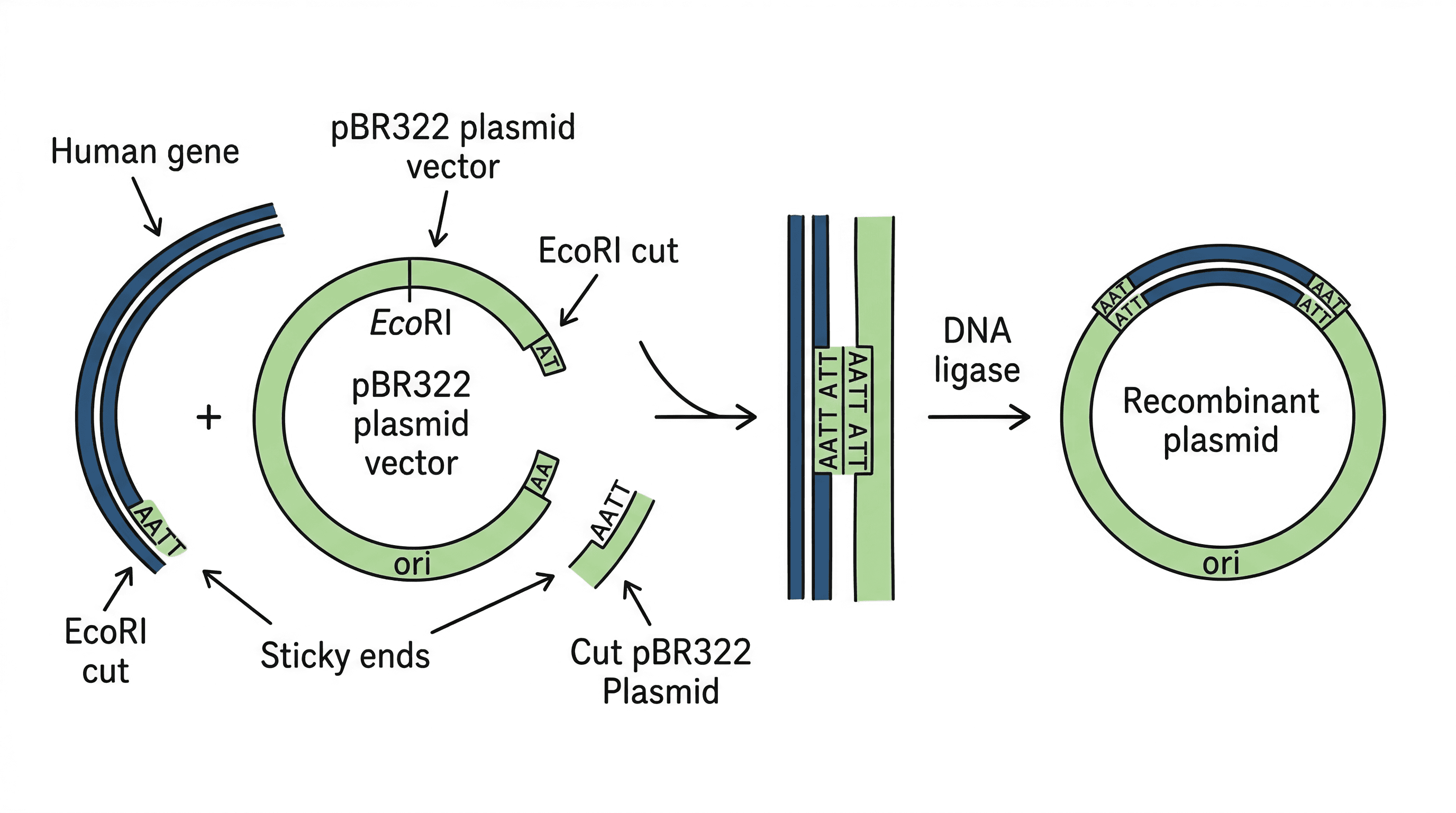
The process of creating recombinant DNA involves isolating a desired gene and inserting it into a plasmid vector. This is achieved by cutting both the gene and the plasmid with the same restriction enzyme, creating complementary sticky ends. These sticky ends then anneal, and DNA ligase forms phosphodiester bonds to seal the gene into the plasmid, forming recombinant DNA.
When describing how to create a recombinant plasmid, always state that the *same* restriction enzyme must be used on both the gene and the plasmid to create complementary sticky ends.
gene editing — A form of genetic engineering in which the genome of an organism can be changed by deleting, inserting or replacing a length of DNA using a method such as the Crispr/Cas9 system.
Gene editing, particularly with Crispr/Cas9, allows for precise, targeted modifications to an organism's DNA at specific locations. This offers greater control and accuracy compared to older genetic engineering methods that inserted DNA randomly. Instead of randomly inserting a new paragraph into a book, gene editing is like using a word processor to precisely cut, paste, or replace specific words or sentences.
When discussing gene editing, highlight its key advantage: the ability to make *precise* and *targeted* changes (deleting, inserting, or replacing) at *specific* locations in the genome.
Genetic technology often requires the amplification of specific DNA sequences or the separation of DNA fragments by size. Techniques like Polymerase Chain Reaction (PCR) and gel electrophoresis are fundamental for these purposes, enabling detailed analysis of genetic material.
polymerase chain reaction (PCR) — An automated process that amplifies selected regions of DNA using alternate stages of polynucleotide separation (denaturation of DNA) and DNA synthesis catalysed by DNA polymerase.
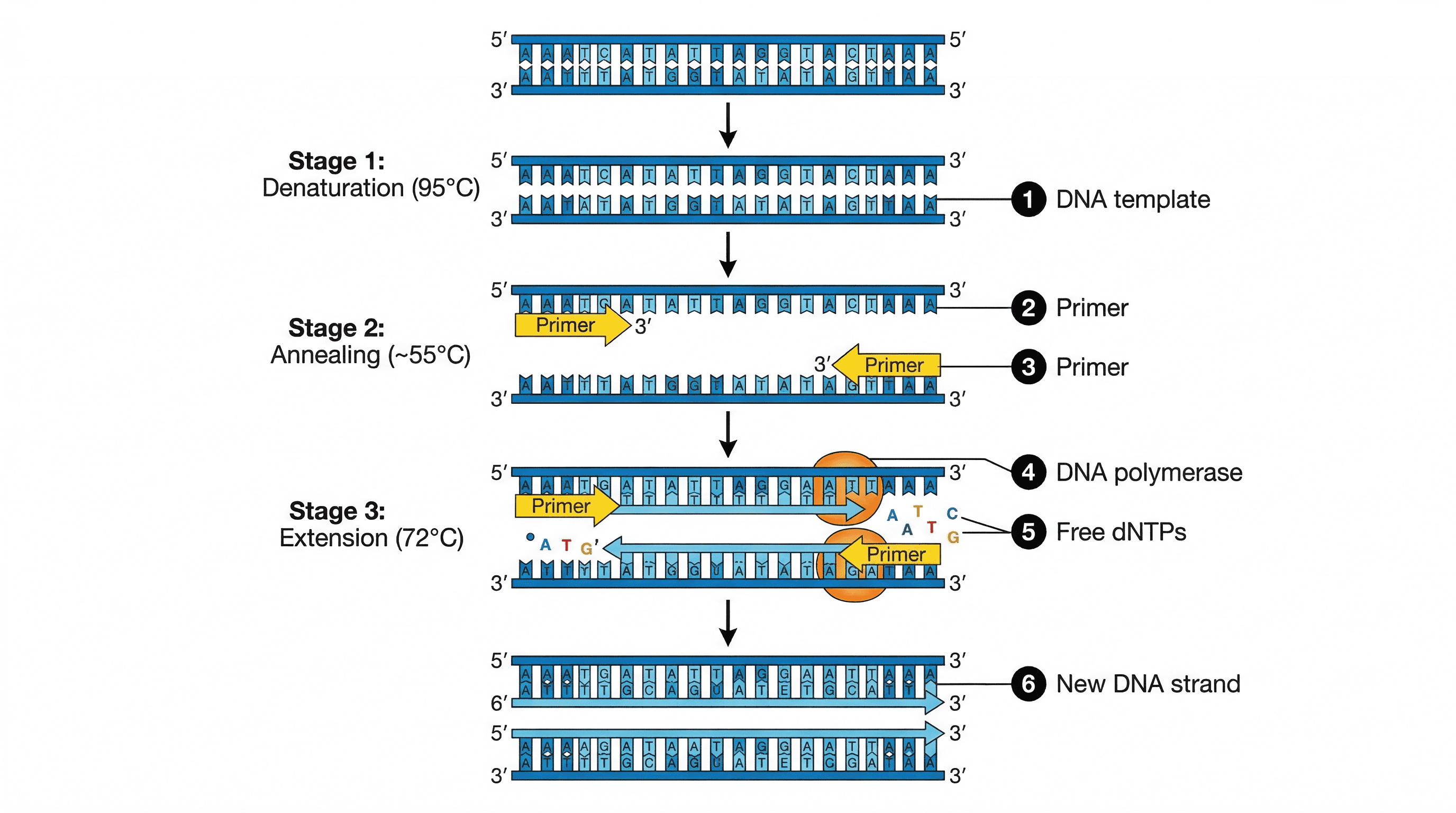
PCR is a powerful technique used to create millions of copies of a specific DNA segment from a very small initial sample. It involves repeated cycles of heating to separate DNA strands, cooling to allow primers to bind, and then DNA synthesis by a heat-stable DNA polymerase. Imagine a molecular photocopier that can make billions of copies of a specific page (DNA segment) from a single original page.
Students often think PCR copies the entire DNA sample, but actually it only amplifies *selected regions* of DNA, defined by the primers used.
For PCR questions, clearly state the purpose of each temperature stage: ~95°C to denature DNA (separate strands), ~55-65°C to anneal primers, and ~72°C for extension by heat-stable Taq polymerase.
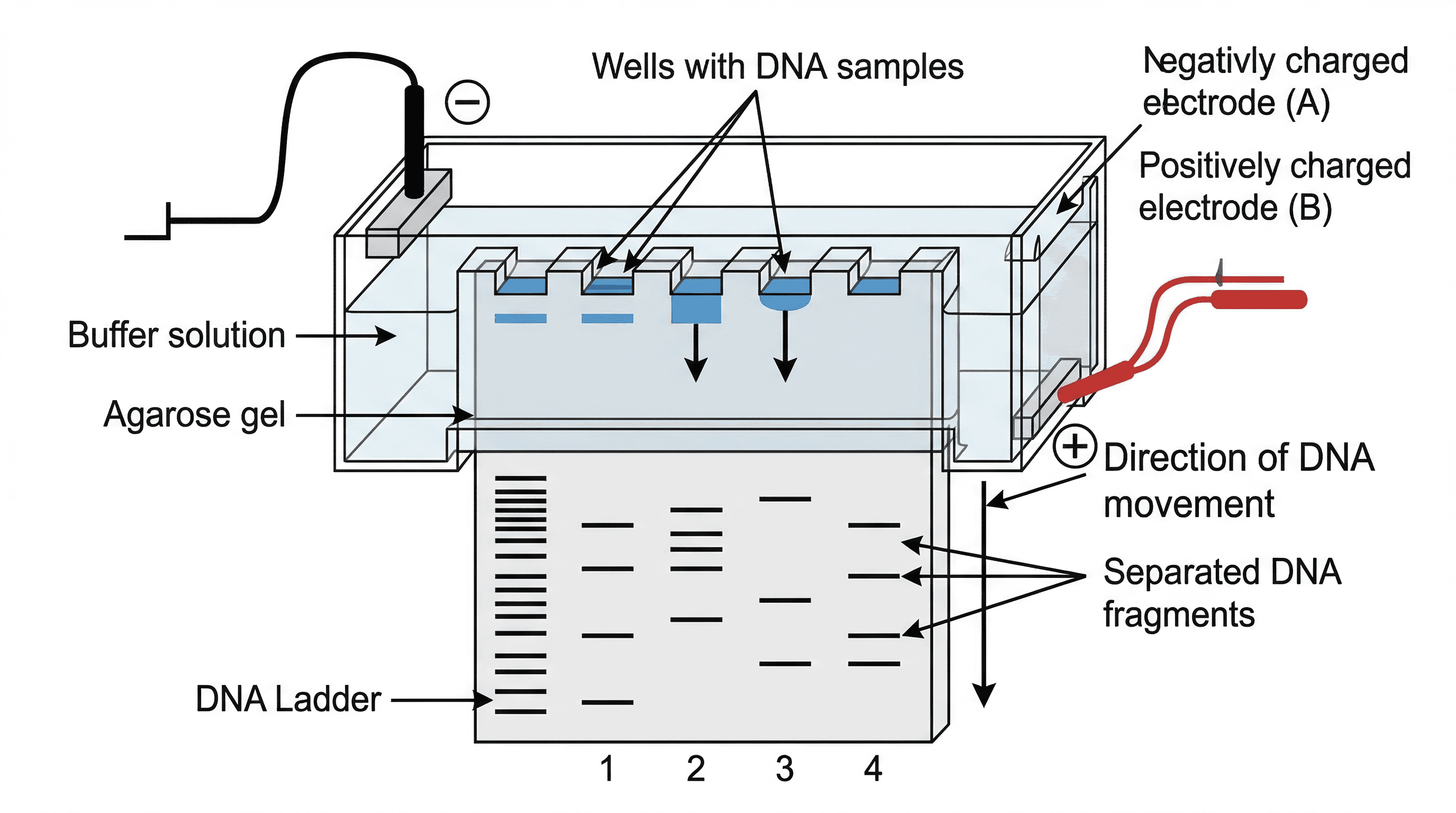
gel electrophoresis — The separation of charged molecules (e.g. DNA) by differential movement through a gel in an electric field; the degree of movement is dependent on the mass of the fragments of DNA.
Gel electrophoresis separates DNA fragments based on their size and charge. DNA, being negatively charged, moves towards the positive electrode. Smaller fragments move faster and further through the gel matrix than larger ones, allowing for size-based separation. Like a race where smaller, lighter runners (DNA fragments) can move faster through a crowded obstacle course (the gel) than larger, heavier runners.
Remember that DNA fragments are negatively charged and move towards the anode (+). The key factor for separation is size: smaller fragments travel further.
Modern genetic technologies generate vast amounts of data, necessitating advanced methods for analysis and storage. Microarrays allow for simultaneous analysis of gene expression, while bioinformatics provides the computational tools to manage and interpret complex biological datasets, including gene sequences and genomes.
microarray (also known as gene or DNA chips) — Slides that are printed with thousands of tiny spots in defined positions, with each spot containing a known DNA sequence; the DNA molecules attached to each slide act as probes to detect lengths of DNA or RNA with complementary sequences.
Microarrays are used to simultaneously analyze the expression of thousands of genes or to compare gene presence between different samples. Fluorescently labeled DNA or RNA samples are hybridized to the probes on the chip, and the resulting fluorescence indicates gene activity or presence. Imagine a library with thousands of tiny, labeled books (probes) on a single shelf. You can quickly see which of your own books (sample DNA/RNA) match and bind to the library's collection.
When describing microarrays, focus on their ability to analyze *many genes simultaneously* and their use of *hybridisation* with labeled samples to detect gene presence or expression.
DNA hybridisation — Binding together of two molecules of single-stranded DNA by complementary base pairing.
DNA hybridisation is the process where two complementary single-stranded DNA molecules (or DNA and RNA) anneal to form a stable double-stranded molecule. This principle is fundamental to techniques like microarrays and gene probes, allowing specific sequences to be identified. Like two halves of a zipper (single DNA strands) coming together and interlocking (base pairing) to form a complete zipper (double-stranded DNA).
gene probe — A length of DNA that has a complementary base sequence to another piece of DNA that you are trying to detect.
Gene probes are short, single-stranded DNA sequences, often labelled with a fluorescent or radioactive tag, used to identify specific DNA fragments. They bind to complementary sequences through DNA hybridisation, making the target DNA detectable. Like a specific key (probe) that only fits and lights up when it finds its matching lock (target DNA sequence).
Students often think a gene probe is the same as a primer, but actually a probe is used for detection and identification, while a primer is used to initiate DNA synthesis in PCR.
bioinformatics — The collection, processing and analysis of biological information and data using computer software.
Bioinformatics integrates biology, computer science, and statistics to manage and interpret large biological datasets, such as gene sequences, protein structures, and gene expression profiles. It is essential for making sense of the vast amount of data generated by modern genetic technologies. Like a digital librarian and data scientist for biological information, organizing, searching, and finding patterns in vast amounts of genetic data.
genome — The complete set of genes or genetic material present in a cell or an organism; the genome of a eukaryote includes the DNA in the nucleus and in the mitochondria; the genomes of plants include chloroplast DNA.
The genome encompasses all the hereditary information of an organism, encoded in its DNA (or RNA for some viruses). It includes both coding and non-coding regions, and in eukaryotes, it extends beyond nuclear DNA to include mitochondrial and chloroplast DNA. The complete instruction manual for building and operating an organism.
Genetic technology has profound applications in medicine, from producing therapeutic proteins to diagnosing and treating genetic disorders. Recombinant proteins, genetic screening, and gene therapy represent key areas where these advancements are transforming healthcare.
genetic screening — Testing an embryo, fetus or adult to find out whether a particular allele is present.
Genetic screening involves analyzing an individual's DNA to identify alleles associated with genetic diseases, even in the absence of symptoms. This can inform reproductive decisions, allow for early intervention, or guide preventative treatments. Like a detective searching for a specific clue (allele) in a person's genetic blueprint (DNA) to predict a future event (disease).
cystic fibrosis (CF) — A genetic disease caused by recessive alleles of the CFTR (cystic fibrosis transmembrane regulator) gene.
Cystic fibrosis is a common genetic disorder affecting mucus and sweat glands, leading to thick, sticky mucus that obstructs airways and ducts. It is caused by mutations in the CFTR gene, which codes for a chloride ion channel protein, impairing water movement across cell membranes. Imagine a faulty pump (CFTR protein) that can't move water properly, causing a thick, sticky sludge (mucus) to build up instead of a free-flowing liquid.
gene therapy — Treatment of a genetic disorder by inserting genetically corrected cells into the body or introducing functioning genes directly into affected cells.
Gene therapy aims to correct genetic defects by introducing functional genes into a patient's cells to replace or supplement faulty ones. While promising, it faces challenges in effectively delivering genes to target cells and ensuring their stable and safe expression. Like replacing a broken part (faulty gene) in a machine (cell) with a working part (functional gene) to restore its proper function.
Students often think gene therapy is a guaranteed cure for all genetic diseases, but actually it has proven very difficult, with limited successful treatments and ongoing challenges in delivery and safety.
When discussing gene therapy, acknowledge both its potential (curing genetic diseases) and the significant challenges (vector delivery, immune response, temporary effects, ethical concerns).
Genetic technology has revolutionized agriculture through the development of genetically modified organisms (GMOs). These modifications aim to improve crop yields, enhance nutritional value, and provide resistance to pests and herbicides, addressing global food security challenges.
Bt toxin — Insecticidal toxin produced by the bacterium Bacillus thuringiensis; the gene for Bt toxin is transferred to crop plants to make them resistant to insect pests.
Bt toxin is a natural insecticide that is harmless to humans and other animals but lethal to specific insect pests. By incorporating the Bt toxin gene into crop plants, these plants can produce their own insecticide, reducing the need for external pesticide sprays. Like giving a plant its own built-in defense system, so it can produce a natural repellent against specific attackers.
bacteriophage (phage) — A type of virus that infects bacteria; phages have double-stranded DNA as their genetic material.
Bacteriophages are viruses that specifically target and replicate within bacteria. Bacteria evolved restriction enzymes as a defense mechanism against these phages, cutting their DNA into harmless fragments. Like a specialized predator (phage) that only hunts a particular type of prey (bacteria).
For questions on the social or ethical implications of genetic technology (e.g., GMOs, gene therapy), provide a balanced argument, discussing both potential benefits and potential risks or concerns.
genetic engineering
Any procedure in which the genetic information in an organism is changed by altering the base sequence of a gene or by introducing a gene from another organism; the organism is then said to be a genetically modified organism (GMO).
recombinant DNA (rDNA)
DNA made by artificially joining together pieces of DNA from two or more different species.
transgenic organism
Any organism that contains DNA from another source, such as from another individual of the same species or from a different species.
genetically modified organism (GMO)
Any organism that has had its DNA changed in a way that does not occur naturally or by selective breeding.
vector
A means of delivering genes into a cell used in gene technology; e.g. plasmids and viruses.
restriction endonuclease (restriction enzyme)
An enzyme, originally derived from bacteria, that cuts DNA molecules; each type of restriction enzyme cuts only at a particular sequence of bases.
bacteriophage (phage)
A type of virus that infects bacteria; phages have double-stranded DNA as their genetic material.
gene probe
A length of DNA that has a complementary base sequence to another piece of DNA that you are trying to detect.
genome
The complete set of genes or genetic material present in a cell or an organism; the genome of a eukaryote includes the DNA in the nucleus and in the mitochondria; the genomes of plants include chloroplast DNA.
sticky ends
Short lengths of unpaired bases that form hydrogen bonds with complementary sequences of bases on other pieces of DNA cut with the same restriction enzyme.
cDNA
Double-stranded complementary DNA formed from an mRNA template using reverse transcriptase and DNA polymerase.
promoter
A length of DNA that includes the binding site for RNA polymerase where transcription of a gene or genes begins; in eukaryotes, promoters also have sites for binding of transcription factors.
gene editing
A form of genetic engineering in which the genome of an organism can be changed by deleting, inserting or replacing a length of DNA using a method such as the Crispr/Cas9 system.
polymerase chain reaction (PCR)
An automated process that amplifies selected regions of DNA using alternate stages of polynucleotide separation (denaturation of DNA) and DNA synthesis catalysed by DNA polymerase.
gel electrophoresis
The separation of charged molecules (e.g. DNA) by differential movement through a gel in an electric field; the degree of movement is dependent on the mass of the fragments of DNA.
microarray (also known as gene or DNA chips)
Slides that are printed with thousands of tiny spots in defined positions, with each spot containing a known DNA sequence; the DNA molecules attached to each slide act as probes to detect lengths of DNA or RNA with complementary sequences.
DNA hybridisation
Binding together of two molecules of single-stranded DNA by complementary base pairing.
bioinformatics
The collection, processing and analysis of biological information and data using computer software.
genetic screening
Testing an embryo, fetus or adult to find out whether a particular allele is present.
cystic fibrosis (CF)
A genetic disease caused by recessive alleles of the CFTR (cystic fibrosis transmembrane regulator) gene.
gene therapy
Treatment of a genetic disorder by inserting genetically corrected cells into the body or introducing functioning genes directly into affected cells.
Bt toxin
Insecticidal toxin produced by the bacterium Bacillus thuringiensis; the gene for Bt toxin is transferred to crop plants to make them resistant to insect pests.
| Command word | What examiners expect |
|---|---|
| Explain | When asked to 'explain' genetic engineering, ensure you mention both altering existing base sequences and introducing genes from other organisms, and the resulting GMO. |
| Describe | When describing how to create a recombinant plasmid, always state that the *same* restriction enzyme must be used on both the gene and the plasmid to create complementary sticky ends. |
| Explain | When explaining PCR, ensure you describe the three distinct temperature-dependent stages: denaturation, annealing (with primers), and extension (with DNA polymerase). |
| Describe | When describing microarrays, focus on their ability to analyze *many genes simultaneously* and their use of *hybridisation* with labeled samples to detect gene presence or expression. |
| Discuss | For questions on the social or ethical implications of genetic technology (e.g., GMOs, gene therapy), provide a balanced argument, discussing both potential benefits and potential risks or concerns. |
Mistake
Confusing genetic engineering with selective breeding.
Correction
Genetic engineering is the direct manipulation of DNA, often between species, while selective breeding relies on choosing individuals with desirable traits for reproduction.
Mistake
Thinking restriction enzymes cut DNA randomly.
Correction
Restriction enzymes are highly specific and only cut at particular base sequences called recognition sites.
Mistake
Assuming PCR copies the entire DNA sample.
Correction
PCR only amplifies the specific target region located between the two primers.
Mistake
Mistaking a gene probe for a primer.
Correction
A probe is a labelled DNA strand used to detect and identify a specific sequence, while a primer is a short strand that provides a starting point for DNA synthesis.
Mistake
Defining recombinant DNA as any altered DNA.
Correction
Recombinant DNA specifically refers to DNA made by joining fragments from two or more different sources, often different species.
Mistake
Thinking gene therapy is a guaranteed cure for all genetic diseases.
Correction
Gene therapy has proven very difficult, with limited successful treatments and ongoing challenges in delivery and safety.