
Biology · Immunity
This chapter explores the human immune system, detailing cellular defences like phagocytes and lymphocytes, and how antigens trigger specific primary and secondary immune responses. It covers the production of antibodies and memory cells for long-term immunity, differentiates various types of immunity, and explains the role of vaccination and monoclonal antibodies in public health and medicine.
immune system — The body’s internal defence system.
This system comprises various cells and molecules that work together to protect the body from pathogens and foreign substances. It distinguishes between self and non-self to mount specific responses, acting like the body's security force with different units and weapons to identify and neutralise threats.
antigen — A substance that is foreign to the body and stimulates an immune response (e.g. any large molecule such as a protein).
Antigens are typically large molecules found on the surface of pathogens or released by them. The immune system recognises these as non-self and produces antibodies or activates T cells against them, much like a unique 'ID badge' on a foreign invader that immune cells recognise as a threat.
Students often think antigens are always pathogens, but actually antigens are specific molecules (e.g., proteins, polysaccharides) that can be part of a pathogen or even a non-pathogenic foreign substance.
self — Refers to substances produced by the body that the immune system does not recognise as foreign, so they do not stimulate an immune response.
The immune system undergoes a maturation process where lymphocytes that react to self-antigens are typically destroyed or inactivated. This prevents the immune system from attacking the body's own cells and tissues. Self-antigens are like the 'uniform' worn by your body's own cells, which the immune system recognises as belonging and therefore doesn't attack.
When discussing self/non-self, link it to the concept of immune tolerance and the prevention of autoimmune diseases.
non-self — Refers to any substance or cell that is recognised by the immune system as being foreign and will stimulate an immune response.
These substances, often antigens, trigger the activation of lymphocytes and the production of antibodies or killer cells. This recognition is crucial for defence against pathogens and foreign tissues. Non-self antigens are like 'enemy uniforms' that the immune system identifies as threats, prompting an attack.
immune response — The complex series of responses of the body to the entry of a foreign antigen; it involves the activity of lymphocytes and phagocytes.
This involves the coordinated action of B-lymphocytes (producing antibodies) and T-lymphocytes (killing infected cells or coordinating the response), often with the help of phagocytes. It leads to the elimination of the antigen and the development of immunological memory, much like a coordinated military operation.
The immune system employs various cellular defences. Phagocytes, including neutrophils and macrophages, are crucial for non-specific immunity. They engulf and destroy pathogens through a process called phagocytosis. Macrophages, after engulfing pathogens, also play a vital role in antigen presentation, displaying pathogen antigens on their surface to activate T-lymphocytes.
Be precise when describing phagocytosis: use key terms like phagosome, lysosome, phagolysosome, and hydrolytic enzymes in a clear sequence.
Lymphocytes are key players in specific immunity. B-lymphocytes are responsible for humoral immunity, primarily producing antibodies. T-lymphocytes mediate cell-mediated immunity and include T-helper cells and T-killer cells. The immune response involves the activity of both lymphocytes and phagocytes working in a coordinated manner.
clonal selection — Individual lymphocytes have cell surface receptors specific to one antigen; this specificity is determined as lymphocytes mature and before any antigens enter the body (during an immune response the only lymphocytes to respond are those with receptors specific to antigens on the surface of the invading pathogen).
When an antigen enters the body, it 'selects' the specific B or T lymphocytes that have complementary receptors. This ensures that only the relevant lymphocytes are activated to proliferate, much like finding a specific key that fits only one particular lock (antigen).
Emphasise that specificity is pre-determined before antigen exposure, and the antigen merely 'selects' the appropriate clone.
clonal expansion — The increase in number of specific clones of lymphocytes by mitosis during an immune response.
Once a specific lymphocyte is selected by an antigen, it undergoes rapid mitotic division to produce a large number of identical cells (a clone). This ensures a sufficient number of effector cells to combat the infection, similar to rapidly making many copies of a key to open all the locks quickly.
Students often confuse clonal selection and clonal expansion, but actually selection is the initial recognition, and expansion is the subsequent proliferation.
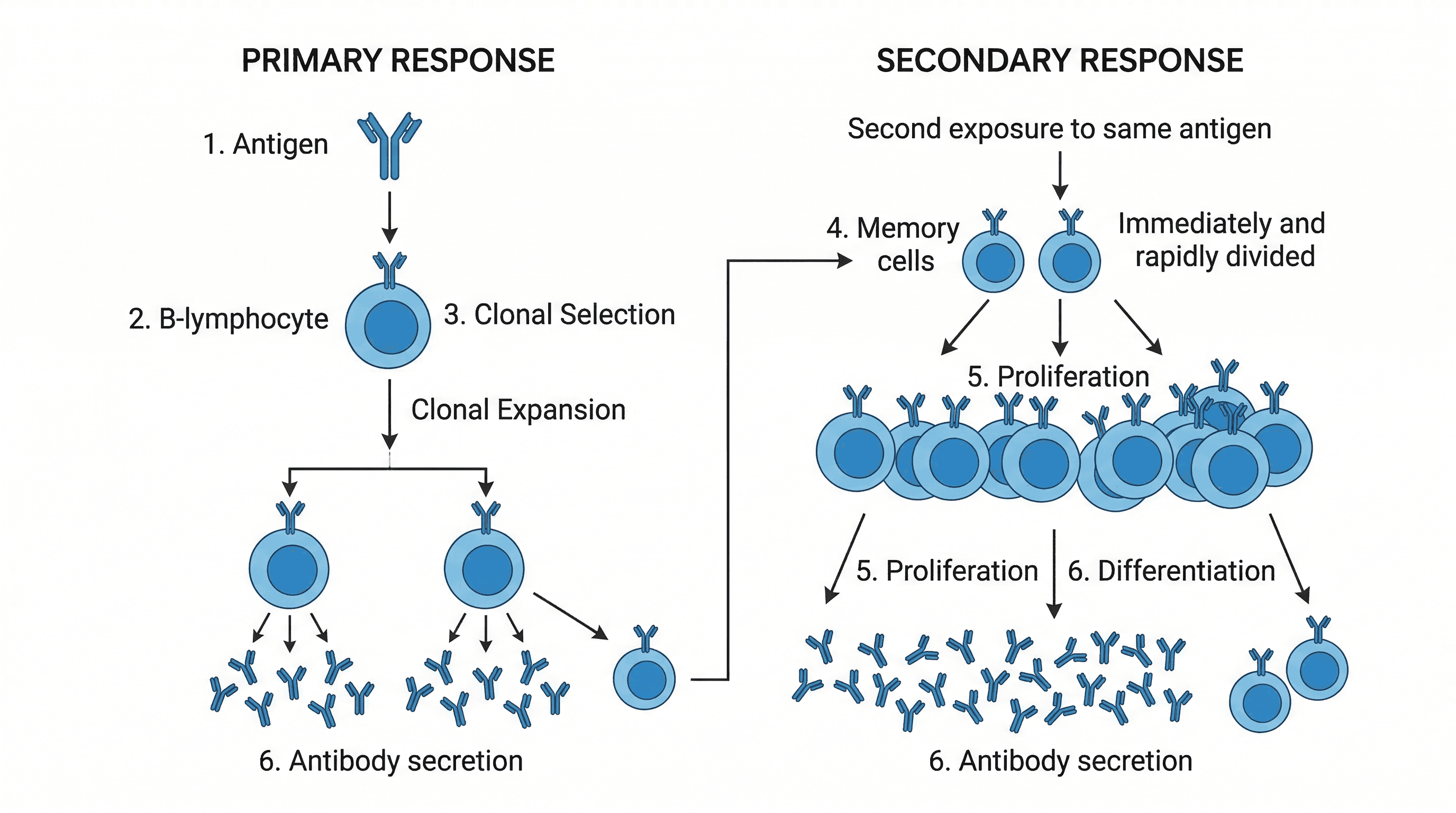
plasma cell — Short-lived, activated B-lymphocyte produced during clonal expansion; plasma cells produce and release antibody molecules.
These cells are highly specialised for antibody production, possessing extensive rough endoplasmic reticulum and mitochondria. They secrete large quantities of specific antibodies into the blood and lymph to combat infection, acting like antibody 'factories'.
Students often think B cells directly produce antibodies, but actually activated B cells differentiate into plasma cells which then secrete antibodies.
memory B cell — Long-lived, activated B-lymphocyte that is specific to one antigen; memory cells are activated to differentiate (develop) into plasma cells during secondary immune responses to the specific antigen.
These cells persist in the body for a long time after the primary infection. Upon re-exposure to the same antigen, they rapidly divide and differentiate into plasma cells and more memory cells, leading to a faster and stronger secondary immune response. They are like the 'veterans' of the immune system.
primary immune response — The first immune response to a specific antigen.
This response is relatively slow and produces a lower concentration of antibodies because there are few specific lymphocytes initially. It takes time for clonal selection and expansion to generate enough effector cells, much like the first time your body encounters a new enemy.
secondary immune response — The second and any subsequent immune responses to a specific antigen.
This response is much faster, stronger, and produces a higher concentration of antibodies due to the presence of memory cells. These memory cells rapidly differentiate into plasma cells upon re-exposure to the antigen, acting like a rapid, pre-planned counter-attack.
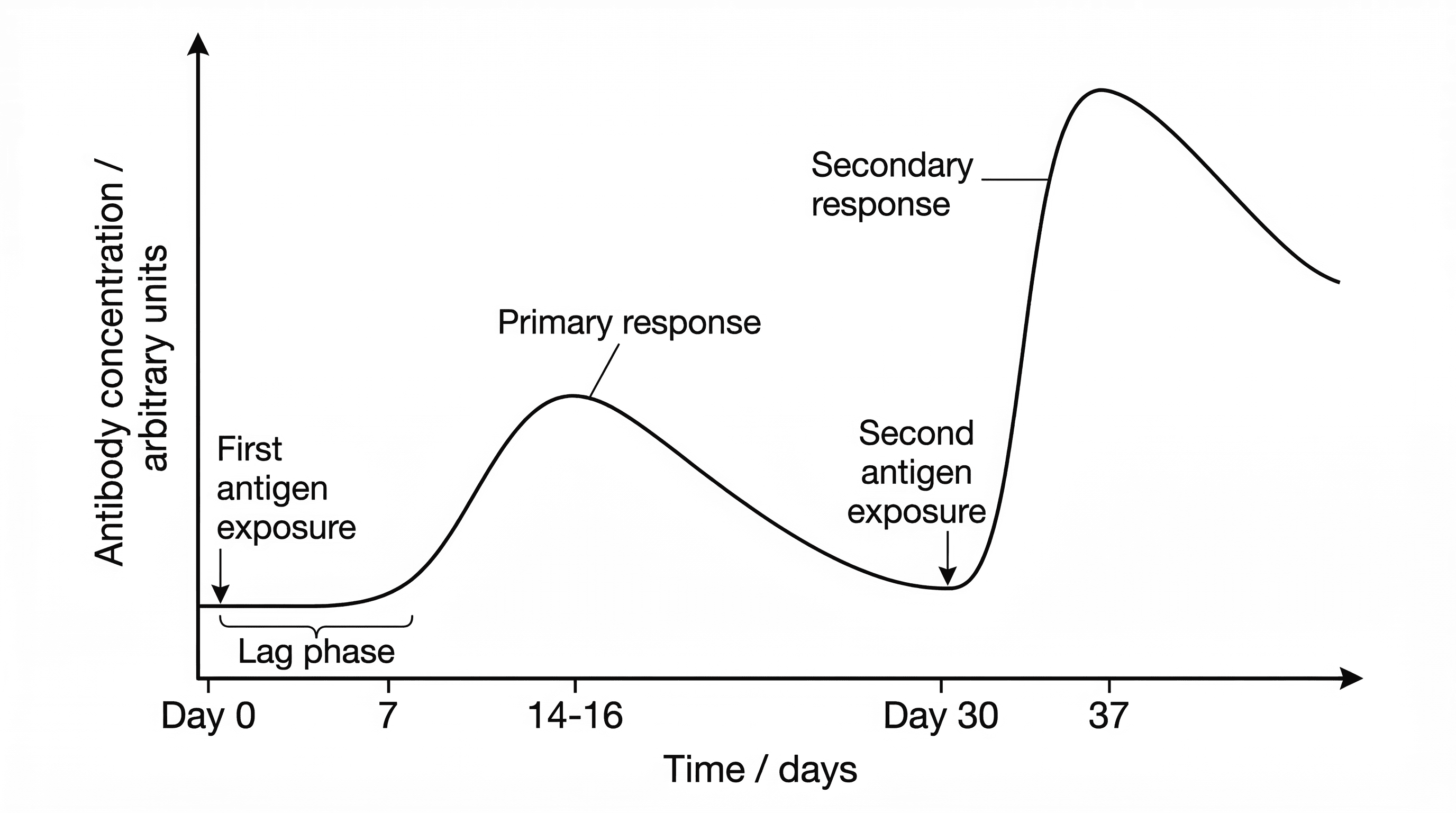
When describing the immune response, always distinguish between the primary and secondary response. Link the secondary response's speed and magnitude to the presence of memory cells.
immunological memory — The ability of the immune system to mount a larger and more rapid response to an antigen that has already been encountered before.
This is the basis of long-term immunity and vaccination. It is mediated by long-lived memory B and T cells that remain in the body after the primary infection, allowing for a swift and effective secondary response, like having a 'most wanted' list for previously encountered criminals.
antibody — A glycoprotein (immunoglobulin) made by specialised lymphocytes in response to the presence of a specific antigen; each type of antibody molecule has a shape that is complementary to its specific antigen.
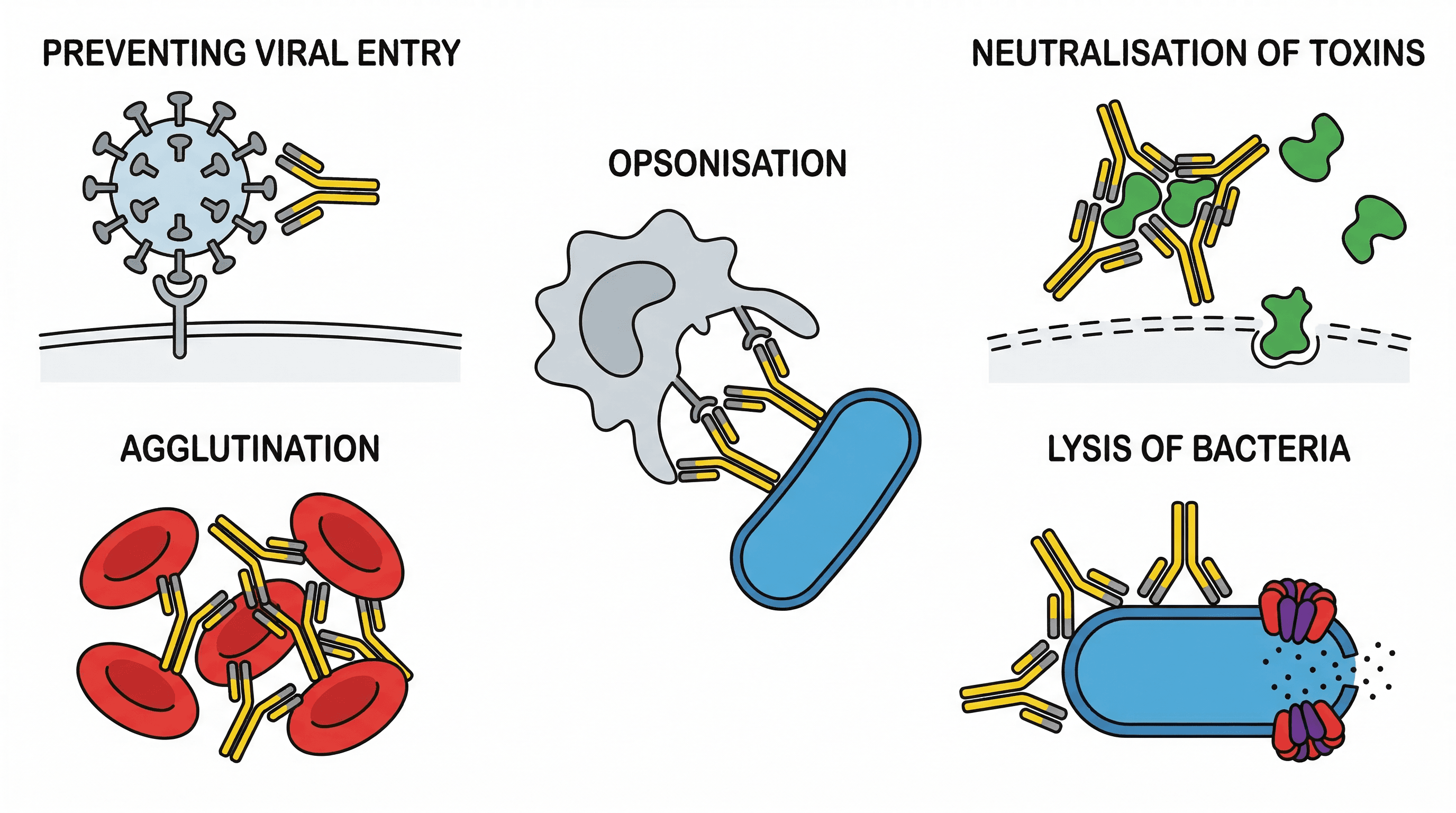
Antibodies are Y-shaped proteins with two identical antigen-binding sites. They bind to specific antigens, marking pathogens for destruction, neutralising toxins, or preventing viral entry into cells, much like a specific 'key' that fits only one particular 'lock' (antigen).
Students often think antibodies directly kill pathogens, but actually they primarily mark pathogens for destruction by other immune cells or neutralise toxins.
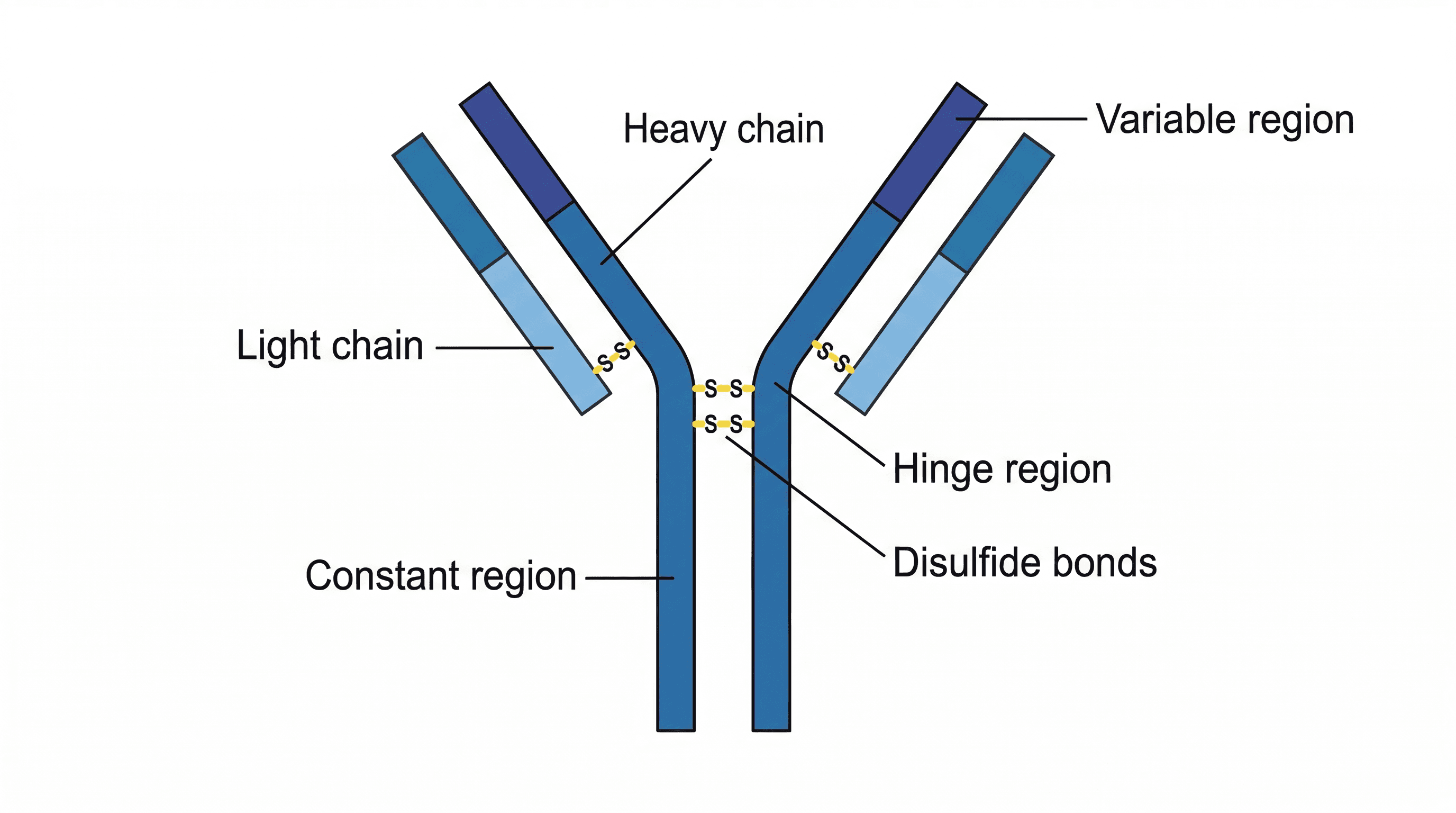
variable region — Region of an antibody molecule composed of parts of the light and heavy polypeptide chains that form the antigen-binding site; the amino acid sequences of the variable site form a specific shape that is complementary to a particular antigen.
This region is highly diverse among different antibody molecules, allowing each antibody to bind specifically to a unique antigen. The precise 3D shape of the variable region determines its antigen specificity, much like the unique 'teeth' of a specific key.
When explaining antibody function, use specific terms like 'agglutination' or 'neutralisation' and state that the variable region determines antigen specificity.
antigen presentation — The process of preparing antigens and exposing them on the surface of host cells (e.g. macrophages) for recognition by T-lymphocytes.
Macrophages, after engulfing pathogens, process their antigens and display them on their cell surface membranes. This allows T-helper cells to recognise the antigen and initiate a coordinated immune response, like a 'wanted poster' displayed by immune cells.
T-helper cell — Type of T-lymphocyte that secretes cytokines to coordinate activity during immune responses.
Upon activation by antigen-presenting cells, T-helper cells release cytokines that stimulate B cells to divide and differentiate into plasma cells, and also enhance the activity of macrophages and T-killer cells. They are like the 'commanders' of the immune system.
T-killer cell — Type of T-lymphocyte that attaches to cells, releasing toxic substances to kill infected cells and cancer cells.
T-killer cells recognise foreign antigens displayed on the surface of infected body cells or cancer cells. They then bind to these cells and release toxic substances, causing the target cells to die, thus eliminating the pathogens within. They are like the 'assassins' of the immune system.
Specify that T-killer cells target and kill *infected host cells* or *cancer cells*, not free pathogens.
cytokine — Any signalling molecule released by cells to influence the growth and/or differentiation of the same or another cell.
Cytokines are a diverse group of small proteins that act as chemical messengers between immune cells. They play crucial roles in regulating the intensity and duration of immune responses, cell proliferation, and differentiation, much like 'walkie-talkies' for immune cells.
Immunity can be broadly categorised into active and passive immunity, and further into natural and artificial types. Active immunity involves the body's own immune system producing antibodies and memory cells, providing long-term protection. Passive immunity involves receiving pre-formed antibodies, offering immediate but temporary protection without memory cell formation.
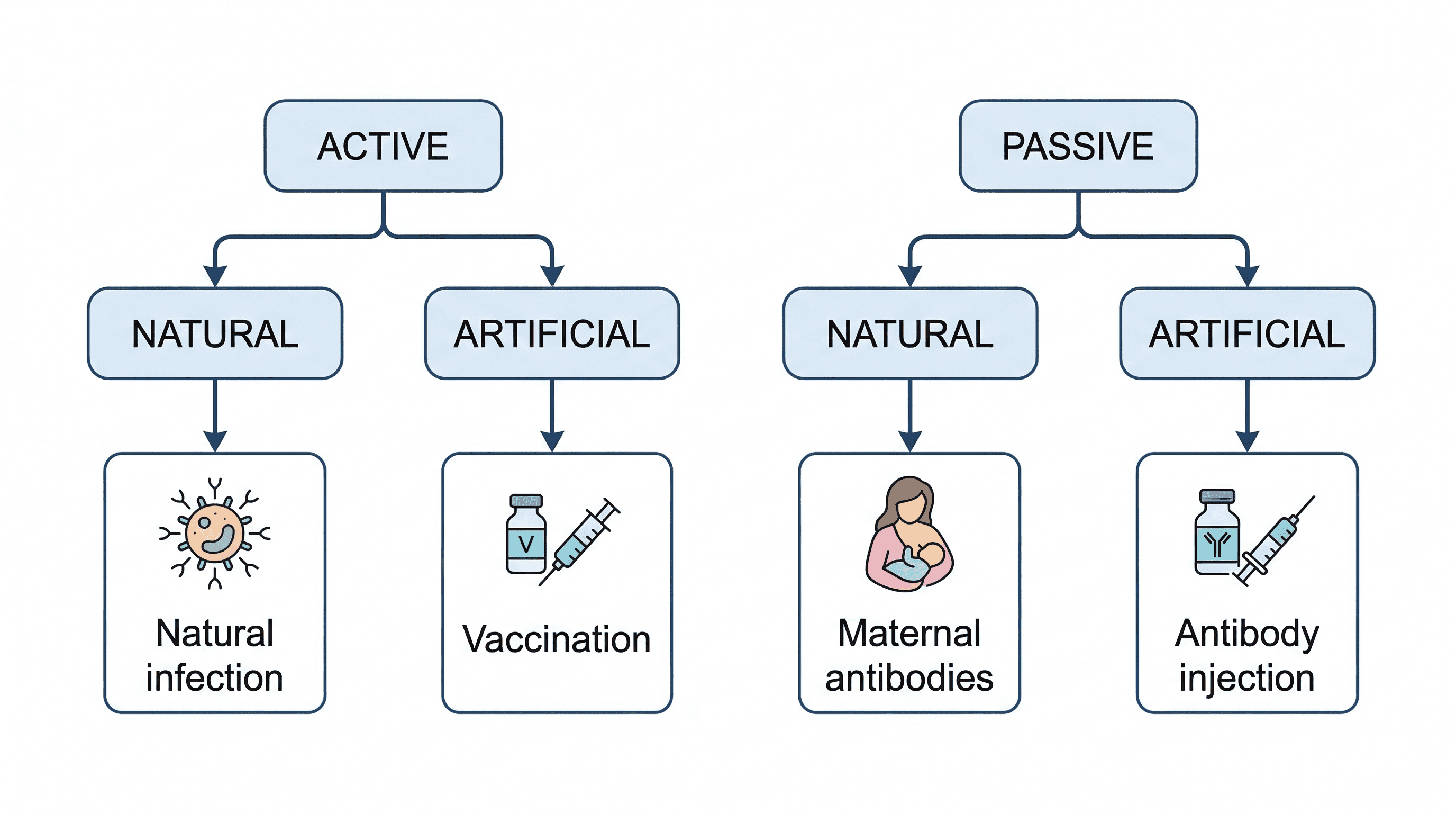
active immunity — Immunity gained when an antigen enters the body, an immune response occurs and antibodies are produced by plasma cells.
This type of immunity involves the body's own immune system actively producing antibodies and memory cells in response to an antigen. It provides long-term protection because of immunological memory, like your body learning to fight an enemy by engaging in battle.
natural active immunity — Immunity gained by being infected by a pathogen.
This occurs when a person naturally encounters a pathogen, gets infected, and their immune system mounts a primary response, leading to the production of memory cells and long-term immunity, like getting sick and then becoming immune.
vaccine — A preparation containing antigens to stimulate active immunity against one or several diseases.
Vaccines introduce antigens (e.g., weakened pathogens, dead pathogens, or pathogen fragments) into the body without causing disease. This stimulates a primary immune response, leading to the formation of memory cells and long-term immunity, acting like a 'training exercise' for your immune system.
Students often think vaccines contain antibodies, but actually they contain antigens to stimulate the body's own antibody production.
artificial active immunity — Immunity gained by putting antigens into the body, either by injection or by mouth.
This is achieved through vaccination, where antigens are deliberately introduced to stimulate the immune system. It results in the production of memory cells and long-term immunity without experiencing the full disease, like getting a 'drill' or 'simulation' of an enemy attack.
vaccination — Giving a vaccine containing antigens for a disease, either by injection or by mouth; vaccination confers artificial active immunity without the development of symptoms of the disease.
This medical procedure aims to prevent infectious diseases by stimulating the immune system to develop immunological memory. It is a key public health strategy for controlling the spread of diseases, like giving your body a 'mugshot' of a criminal.
passive immunity — The temporary immunity gained without there being an immune response.
This type of immunity involves receiving pre-formed antibodies from another source, rather than the body producing its own. It provides immediate but temporary protection because no memory cells are formed, like receiving 'borrowed' weapons.
Students often think passive immunity is long-lasting, but actually it is temporary because the body does not produce its own memory cells.
artificial passive immunity — The immunity gained by injecting antibodies.
This is used for immediate protection against rapidly acting diseases (e.g., tetanus, diphtheria) or toxins. Antibodies are collected from vaccinated donors and injected into the recipient, providing immediate but short-lived protection, like getting an immediate 'reinforcement' of trained soldiers.
natural passive immunity — The immunity gained by a fetus when maternal antibodies cross the placenta or the immunity gained by an infant from breast milk.
This provides temporary protection to newborns and infants against diseases their mother is immune to. Maternal antibodies (IgG across placenta, IgA in colostrum/breast milk) protect the infant until their own immune system matures, like a mother passing on her 'shield' to her baby.
In comparisons, clearly differentiate between active and passive immunity by mentioning the source of antibodies, presence/absence of memory cells, and duration of protection.
Vaccination programmes are crucial for controlling the spread of infectious diseases. By stimulating artificial active immunity, vaccines lead to the formation of memory cells without causing disease. This not only protects vaccinated individuals but also contributes to herd immunity, where a large proportion of the population being immune reduces pathogen transmission, protecting those who cannot be vaccinated.
herd immunity — Vaccinating a large proportion of the population; provides protection for those not immunised as transmission of a pathogen is reduced.
When a high percentage of a population is immune to a disease, it significantly reduces the likelihood of the pathogen spreading, thereby protecting vulnerable individuals who cannot be vaccinated (e.g., infants, immunocompromised). This creates a 'protective bubble' around a community.
For questions on vaccination, explain its role in creating herd immunity, which protects vulnerable individuals in a population by reducing pathogen transmission.
ring immunity — Vaccinating all those people in contact with a person infected with a specific disease to prevent transmission in the immediate area.
This strategy is used to contain outbreaks by creating a 'zone of immunity' around an infected individual. It prevents the pathogen from spreading further into the wider population, like creating a 'firebreak' around a small fire.
Monoclonal antibodies (Mabs) are highly specific antibodies produced in the laboratory. They are generated using the hybridoma method, which involves fusing antibody-producing plasma cells with immortal cancer cells. This creates hybridoma cells that can both secrete specific antibodies and divide indefinitely, allowing for large-scale production.
monoclonal antibody (Mab) — An antibody made by a single clone of hybridoma cells; all the antibody molecules made by the clone have identical variable regions so are specific to one antigen.
Mabs are highly specific antibodies produced in large quantities from a single B cell clone. Their specificity makes them valuable tools in diagnosis (e.g., detecting specific antigens) and treatment (e.g., targeting cancer cells), acting like 'precision-guided missiles'.
hybridoma — A cell formed by the fusion of a plasma cell and a cancer cell; it can both secrete antibodies and divide to form other cells like itself.
Hybridomas combine the antibody-producing ability of plasma cells with the immortality of cancer cells. This allows for the continuous production of large quantities of specific monoclonal antibodies in culture, like a 'super cell' that is an endless factory for specific antibodies.
For monoclonal antibody production, remember the key fusion step: a specific B-lymphocyte (plasma cell) is fused with a myeloma cell to create an immortal, antibody-producing hybridoma cell.
Monoclonal antibodies have diverse medical applications. In diagnosis, their high specificity allows them to detect specific antigens, for example, in pregnancy tests or for identifying disease markers. In treatment, Mabs can be used to target specific cells, such as cancer cells, by binding to unique antigens on their surface, or to deliver drugs directly to diseased tissues, minimising side effects.
When asked to describe the immune system, ensure you mention both cellular and molecular components and their coordinated action.
immune system
The body’s internal defence system.
antigen
A substance that is foreign to the body and stimulates an immune response (e.g. any large molecule such as a protein).
self
Refers to substances produced by the body that the immune system does not recognise as foreign, so they do not stimulate an immune response.
non-self
Refers to any substance or cell that is recognised by the immune system as being foreign and will stimulate an immune response.
antibody
A glycoprotein (immunoglobulin) made by specialised lymphocytes in response to the presence of a specific antigen; each type of antibody molecule has a shape that is complementary to its specific antigen.
immune response
The complex series of responses of the body to the entry of a foreign antigen; it involves the activity of lymphocytes and phagocytes.
clonal selection
Individual lymphocytes have cell surface receptors specific to one antigen; this specificity is determined as lymphocytes mature and before any antigens enter the body (during an immune response the only lymphocytes to respond are those with receptors specific to antigens on the surface of the invading pathogen).
clonal expansion
The increase in number of specific clones of lymphocytes by mitosis during an immune response.
plasma cell
Short-lived, activated B-lymphocyte produced during clonal expansion; plasma cells produce and release antibody molecules.
memory B cell
Long-lived, activated B-lymphocyte that is specific to one antigen; memory cells are activated to differentiate (develop) into plasma cells during secondary immune responses to the specific antigen.
primary immune response
The first immune response to a specific antigen.
secondary immune response
The second and any subsequent immune responses to a specific antigen.
immunological memory
The ability of the immune system to mount a larger and more rapid response to an antigen that has already been encountered before.
variable region
Region of an antibody molecule composed of parts of the light and heavy polypeptide chains that form the antigen-binding site; the amino acid sequences of the variable site form a specific shape that is complementary to a particular antigen.
antigen presentation
The process of preparing antigens and exposing them on the surface of host cells (e.g. macrophages) for recognition by T-lymphocytes.
T-helper cell
Type of T-lymphocyte that secretes cytokines to coordinate activity during immune responses.
T-killer cell
Type of T-lymphocyte that attaches to cells, releasing toxic substances to kill infected cells and cancer cells.
cytokine
Any signalling molecule released by cells to influence the growth and/or differentiation of the same or another cell.
active immunity
Immunity gained when an antigen enters the body, an immune response occurs and antibodies are produced by plasma cells.
natural active immunity
Immunity gained by being infected by a pathogen.
vaccine
A preparation containing antigens to stimulate active immunity against one or several diseases.
artificial active immunity
Immunity gained by putting antigens into the body, either by injection or by mouth.
vaccination
Giving a vaccine containing antigens for a disease, either by injection or by mouth; vaccination confers artificial active immunity without the development of symptoms of the disease.
passive immunity
The temporary immunity gained without there being an immune response.
artificial passive immunity
The immunity gained by injecting antibodies.
natural passive immunity
The immunity gained by a fetus when maternal antibodies cross the placenta or the immunity gained by an infant from breast milk.
herd immunity
Vaccinating a large proportion of the population; provides protection for those not immunised as transmission of a pathogen is reduced.
ring immunity
Vaccinating all those people in contact with a person infected with a specific disease to prevent transmission in the immediate area.
monoclonal antibody (Mab)
An antibody made by a single clone of hybridoma cells; all the antibody molecules made by the clone have identical variable regions so are specific to one antigen.
hybridoma
A cell formed by the fusion of a plasma cell and a cancer cell; it can both secrete antibodies and divide to form other cells like itself.
| Command word | What examiners expect |
|---|---|
| Describe | For 'Describe the mode of action of macrophages and neutrophils', detail the steps of phagocytosis: engulfment, phagosome formation, fusion with lysosome, and enzymatic digestion. For 'Describe what happens during a primary immune response', outline the slower onset, lower antibody production, and generation of memory cells. |
| Explain | For 'Explain what is meant by the term antigen and state the difference between self antigens and non-self antigens', define antigen and then clearly differentiate how the immune system responds to each, linking to immune tolerance. For 'Explain how the molecular structure of antibodies is related to their functions', discuss the Y-shape, variable regions for specificity, and constant regions for effector functions. For 'Explain that vaccines contain antigens that stimulate immune responses to provide long-term immunity', detail how antigens trigger a primary response, leading to memory cell formation and subsequent faster secondary responses. |
| Outline | For 'Outline the hybridoma method for the production of monoclonal antibodies', provide a concise step-by-step account: immunisation, B cell isolation, fusion with myeloma cells, selection of hybridomas, and cloning. For 'Outline the principles of using monoclonal antibodies in the diagnosis and treatment of diseases', briefly state how their specificity allows for detection (diagnosis) or targeted action (treatment). |
| Differentiate | For 'Describe the differences between the different types of immunity: active and passive and natural and artificial', clearly state the key distinctions for each pair, focusing on the source of antibodies, whether memory cells are formed, and the duration of protection. |
Mistake
Confusing antibodies (proteins made by your immune system) with antibiotics (drugs that kill bacteria).
Correction
Antibodies are specific proteins produced by lymphocytes, part of the body's natural defence. Antibiotics are medications that target and kill bacteria.
Mistake
Thinking antigens are always whole pathogens.
Correction
Antigens are specific molecules (e.g., proteins, polysaccharides) that can be part of a pathogen, a toxin, or even a non-pathogenic foreign substance, and they trigger an immune response.
Mistake
Stating that antibodies directly kill pathogens.
Correction
Antibodies primarily mark pathogens for destruction by other immune cells (like phagocytes), neutralise toxins, or prevent pathogens from entering cells. They do not directly kill pathogens.
Mistake
Mixing up clonal selection (recognition) with clonal expansion (proliferation).
Correction
Clonal selection is the initial binding of a specific antigen to a complementary lymphocyte. Clonal expansion is the subsequent rapid mitotic division of that activated lymphocyte to produce many identical cells.
Mistake
Believing passive immunity (e.g., from mother to baby) is long-lasting.
Correction
Passive immunity is temporary because the body receives pre-formed antibodies and does not produce its own memory cells. These antibodies are eventually broken down.
Mistake
Thinking vaccines contain antibodies.
Correction
Vaccines contain antigens (or parts of pathogens) to stimulate the body's own immune system to produce antibodies and memory cells, thereby conferring active immunity.