
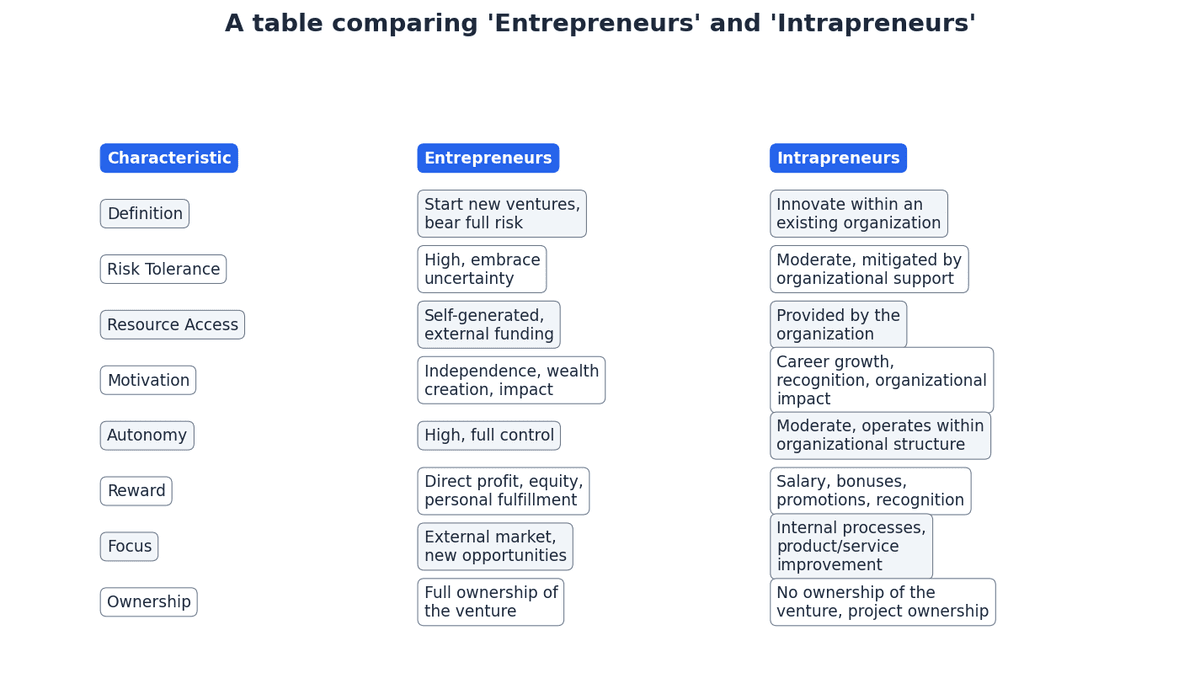
Fig 1.4 shows a table comparing 'Entrepreneurs' and 'Intrapreneurs' across three categories: 'Main Activity', 'Risk', and 'Rewards'. (a) Analyse how the 'Main Activity' differences, as shown in Fig 1.4, lead to the differing 'Risk' levels for entrepreneurs and intrapreneurs. [4] (b) Discuss the advantages for a large established company in fostering intrapreneurship, considering the 'Rewards' and 'Risk' for intrapreneurs as presented in Fig 1.4. [5]
A small design agency, 'Creative Spark', is experiencing high staff turnover and missed deadlines. Employees often complain about a lack of direction and unclear instructions from their team leaders. (a) State two qualities of effective management. [2] (b) Outline two ways poor leadership skills can negatively impact employee motivation. [4]
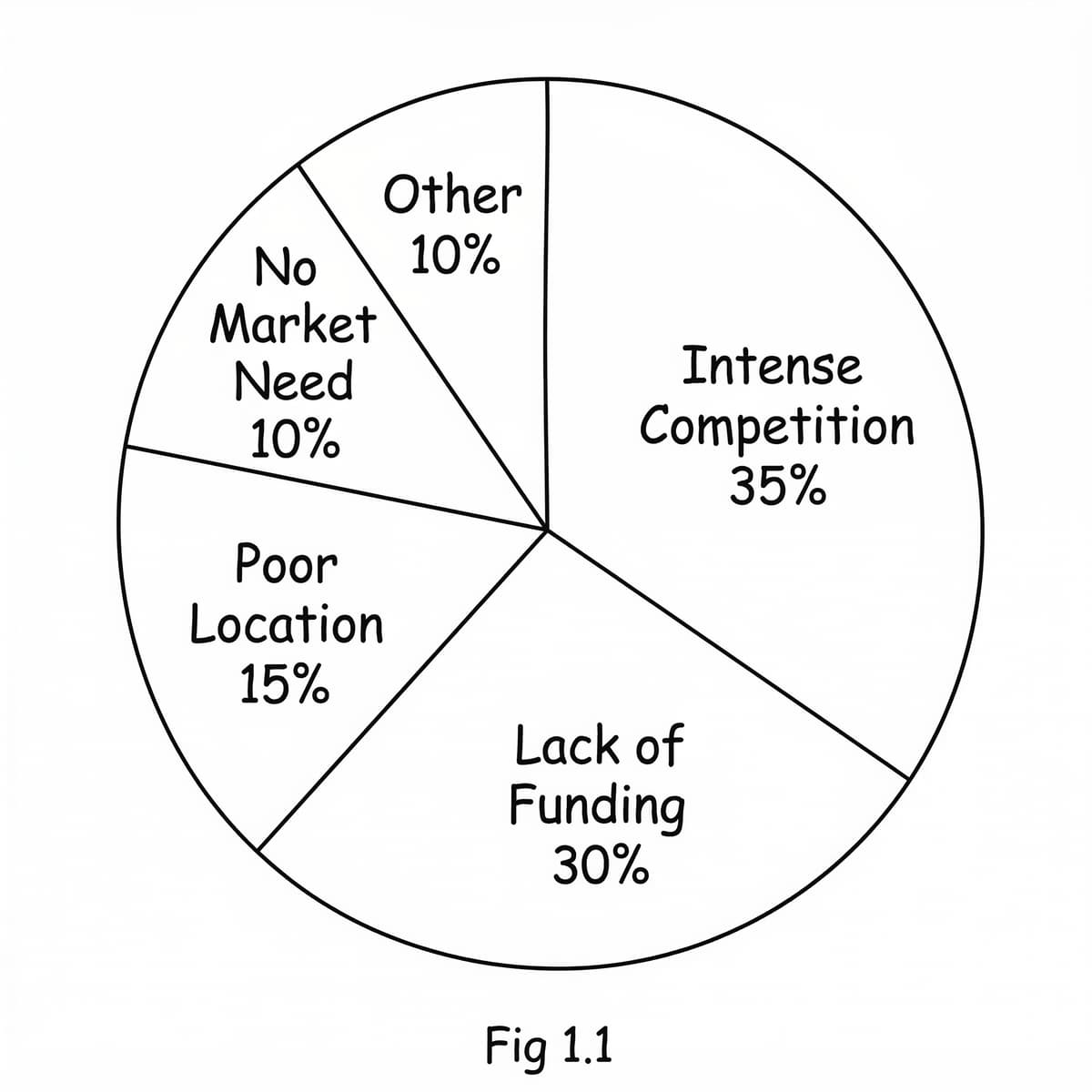
New businesses face a multitude of challenges that can hinder their success and even lead to failure. Understanding the relative impact of these barriers is crucial for aspiring entrepreneurs. Fig. 1.1 shows a pie chart illustrating the primary reasons for business failure among start-ups in a particular region over the last year. (a) Evaluate the extent to which 'competition' is the most challenging barrier for new businesses, compared to 'cost of good locations' and 'lack of a business opportunity'. [10]
The market for household cleaning products is highly competitive, with several major companies vying for consumer loyalty. Fig. 1.1 shows the market share of two key competitors, Company A and Company B, over a five-year period. Fig. 1.1: Market Share of Companies A and B (2018-2022) (a) Analyse the trends in market share for Company A and Company B between 2018 and 2022, as shown in Fig. 1.1. [6] (b) Evaluate one possible reason for the change in market share of Company B after 2020. [4]
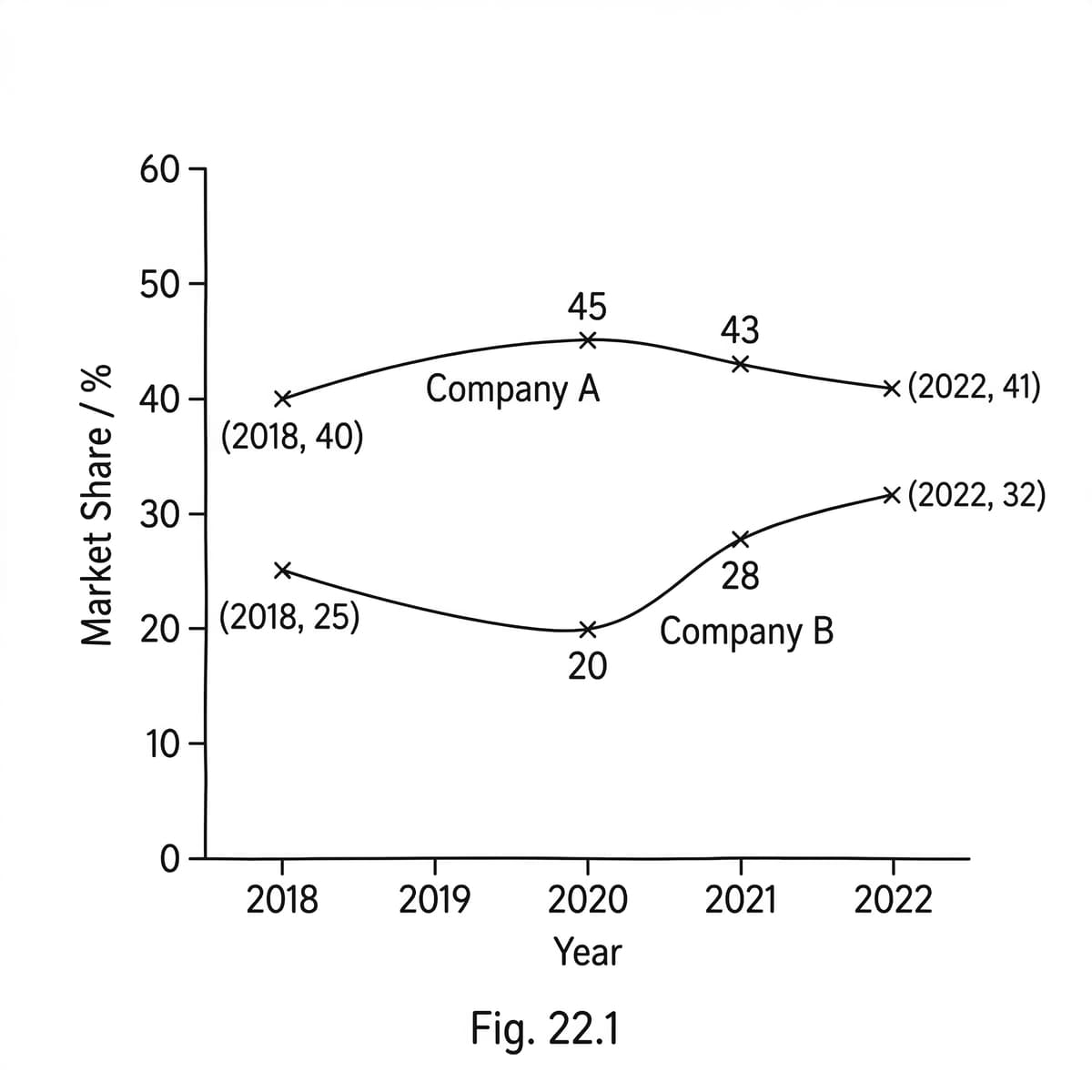
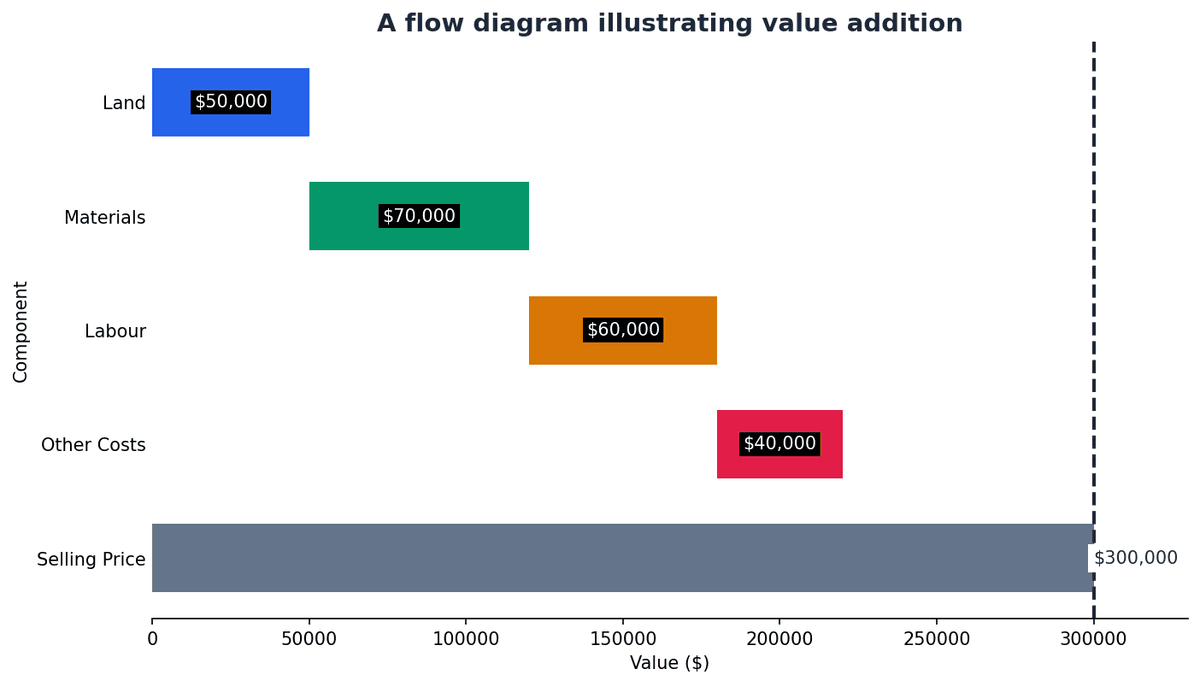
Fig 1.3 shows the process of adding value by building a house. (a) Calculate the percentage of the selling price that represents the cost of bought-in materials for the house. (b) Analyse how a business could increase the added value of the house, using specific values from the diagram as a starting point. (c) Evaluate the importance of adding value for the long-term success of a house-building business.
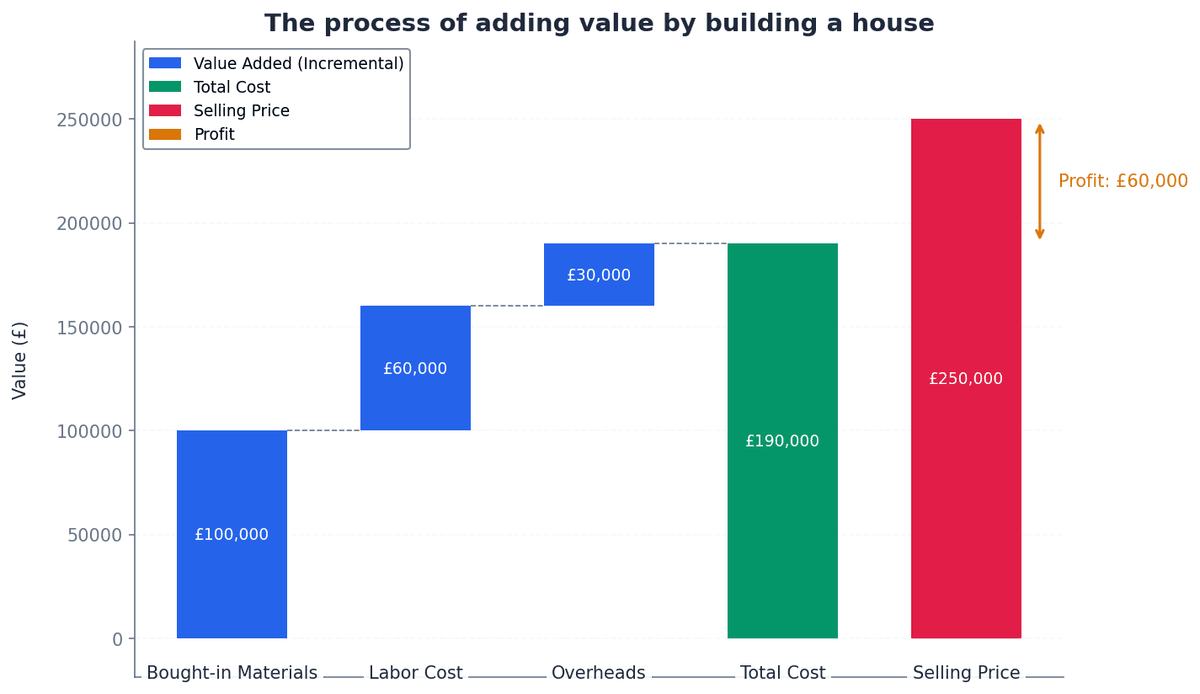
Fig 1.3 shows the process of adding value by building a house. (a) Calculate the profit margin (profit as a percentage of selling price) if total costs (materials + other costs) were $250,000 for the house. [2] (b) Explain the difference between added value and profit using the figures from the diagram and your calculation in (a). [3] (c) Discuss how technological advancements in construction might affect both material costs and the selling price of houses over time, impacting added value. [3]
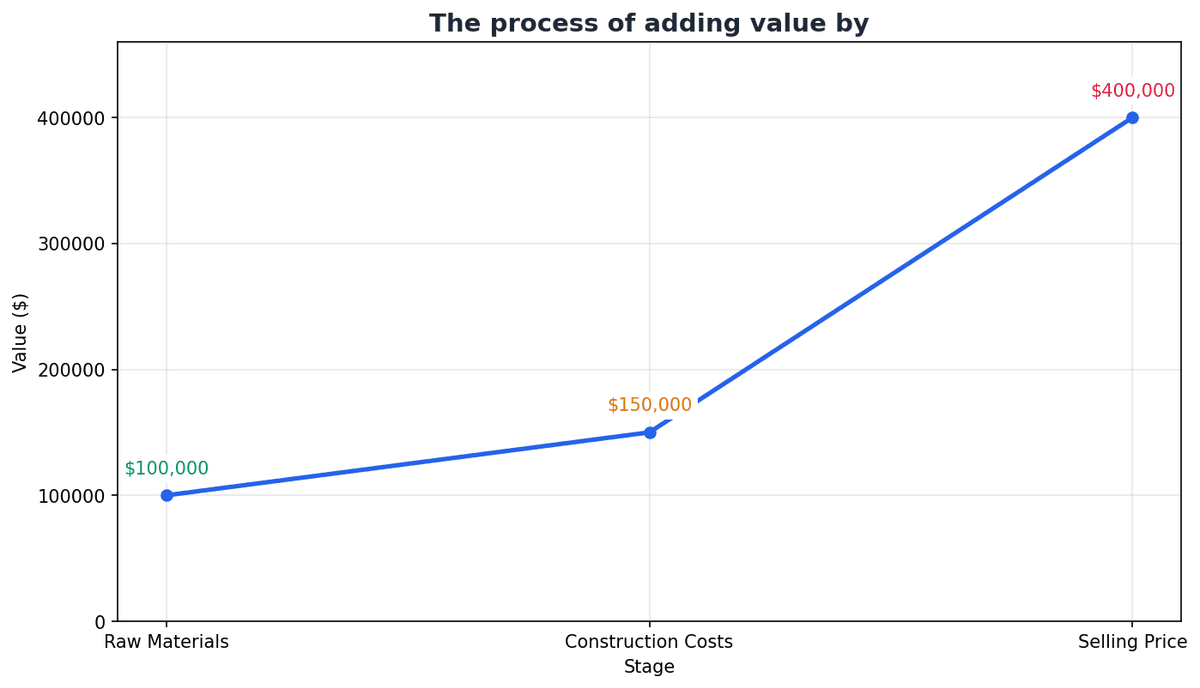
Fig 1.3 shows the process of adding value by building a house. (a) Calculate the ratio of the selling price to the cost of materials for the house, expressing it to two decimal places. (b) Justify two different strategies a house-building business could employ to significantly increase the added value, referring to the initial figures. (c) Evaluate whether increasing added value always leads to higher profit for the business.
A small artisanal bakery, 'The Daily Crumb', developed a business plan two years ago when it first opened. Recently, several new competitors have entered the local market, and the cost of key ingredients has significantly increased. (a) Describe how external environmental changes can limit the effectiveness of a business plan. [3] (b) Analyse the potential impact of inaccurate market research data on the financial forecasts within a business plan. [5]
A growing technology start-up has recently experienced a decline in productivity and an increase in employee complaints. Some employees report feeling unsure about their roles and the company's direction. (a) Explain how a lack of clear communication from management can negatively impact employee motivation. [4] (b) Describe two ways poor financial management skills can lead to business failure. [4]
Enterprise plays a crucial role in fostering economic growth and development within a country. (a) Give two ways in which enterprise contributes to job creation in a country. [2] (b) Identify three characteristics of an entrepreneurial economy. [3]
An innovative tech start-up, 'InnovateTech', has developed a new smart home device. Before its official launch, the marketing team is debating whether to invest heavily in identifying a specific target customer base. (a) Discuss the importance of identifying a target customer base before launching a new product. [6] (b) Recommend one strategy for a business struggling with a declining customer base, justifying your choice. [4]
Setting up a new business involves navigating various challenges, and the choice of location can be a critical factor in success or failure. (a) Outline the concept of 'cost of good locations' as a barrier to entrepreneurship. [3] (b) Explain how the 'cost of good locations' can particularly impact small start-up businesses compared to established large businesses. [6]
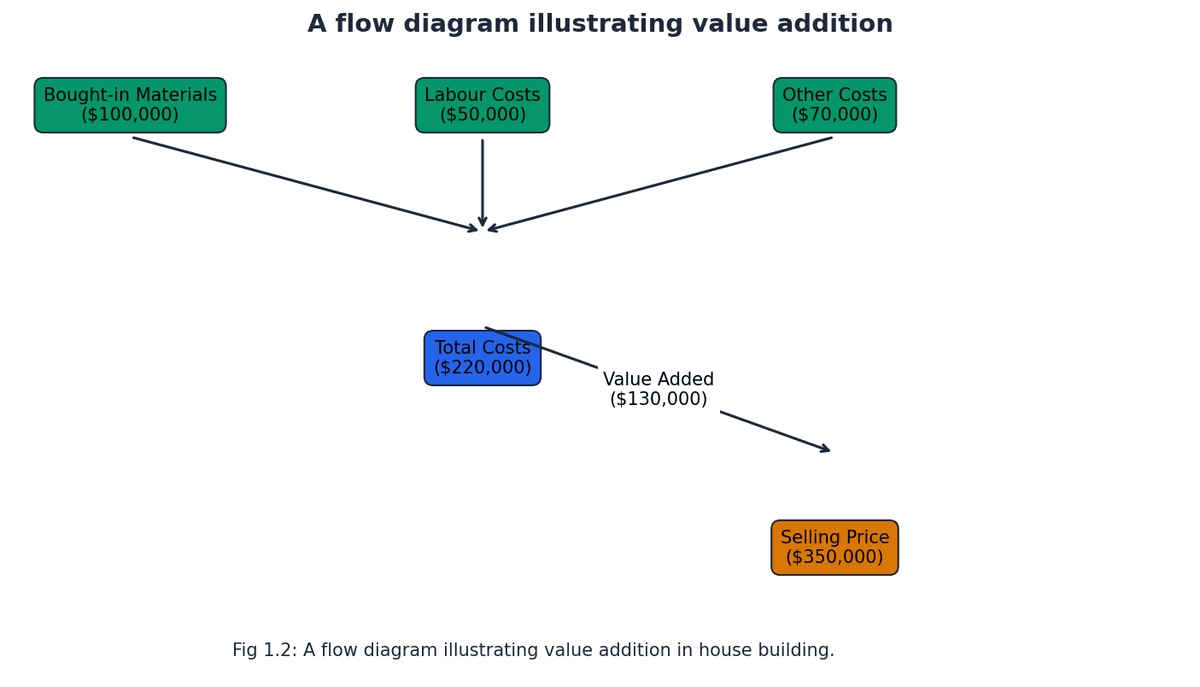
Fig 1.2 shows a flow diagram illustrating value addition in house building. (a) Calculate the percentage of the 'Selling Price' represented by 'Other Costs' in Fig 1.2. [2] (b) Evaluate the importance of design and branding in increasing the 'Selling Price' of a finished house, referring to the current 'Selling Price' of $350,000 in Fig 1.2. [4] (c) Suggest one way the builder could reduce 'Bought-in Materials' cost without significantly affecting quality, and explain its potential impact on added value, using the figures from Fig 1.2. [3]
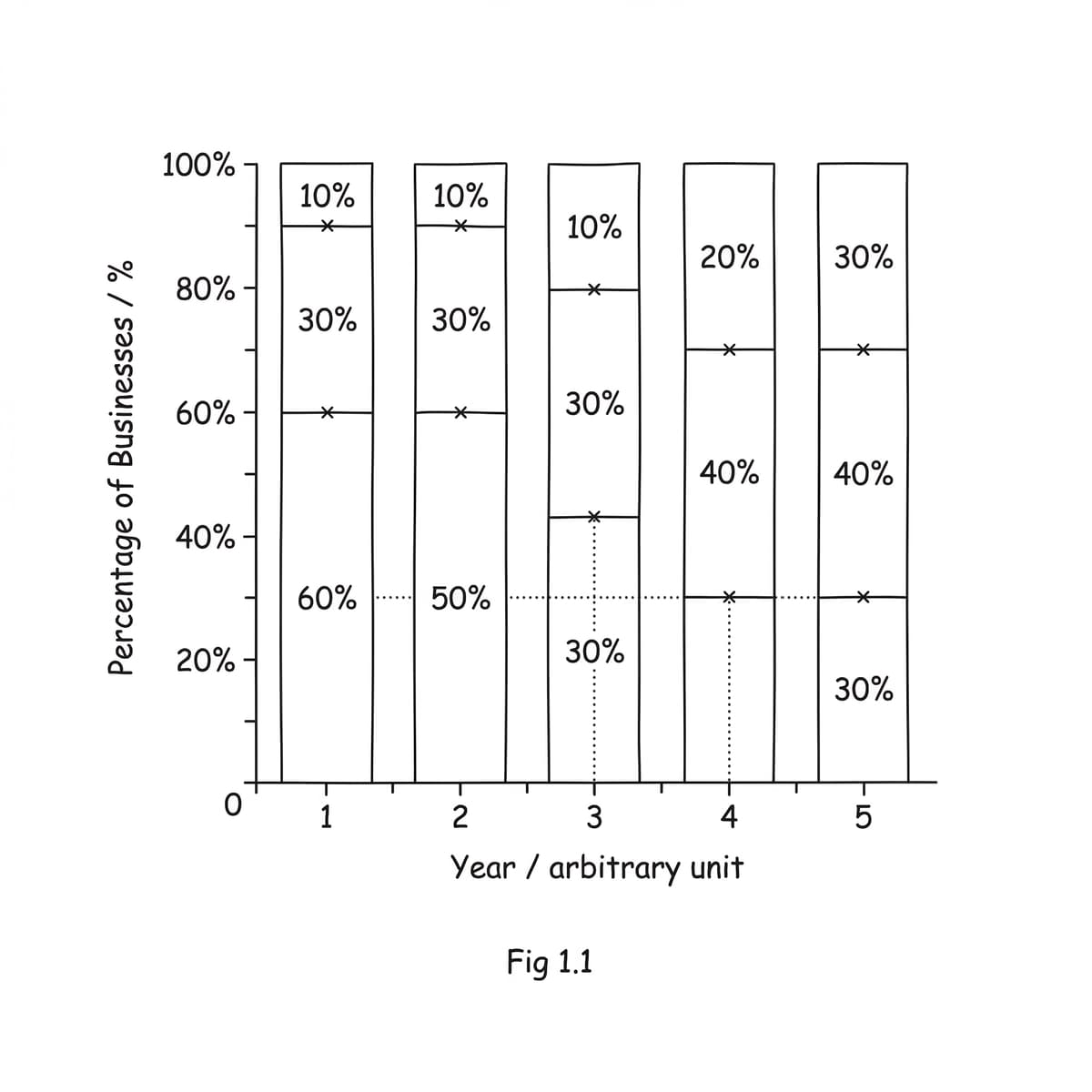
Businesses often evolve their scale of operations over time, seeking new growth opportunities. Fig 1.1 shows a bar chart illustrating the percentage of businesses operating at different scales over five years. (a) Describe the trend in business expansion shown in Fig 1.1. [3] (b) Explain one potential benefit for a local business to expand to a national level. [3] (c) Suggest one challenge an international business might face that a national business would not. [3]
A small online clothing boutique, 'StyleHub', created a business plan when it first launched. However, the fashion trends have changed rapidly, and new social media platforms have emerged, altering how customers discover products. (a) State two reasons why a business plan might become outdated quickly. [2] (b) Outline how a lack of flexibility can be a limitation of a business plan. [4]
Fig 1.3 shows the process of adding value by building a house. (a) State the initial selling price of the finished house. [1] (b) Calculate the added value if the material costs were $100,000 instead of the figure shown, with the selling price remaining the same. [2] (c) Identify one other cost, apart from materials, that a house builder would incur. [1]
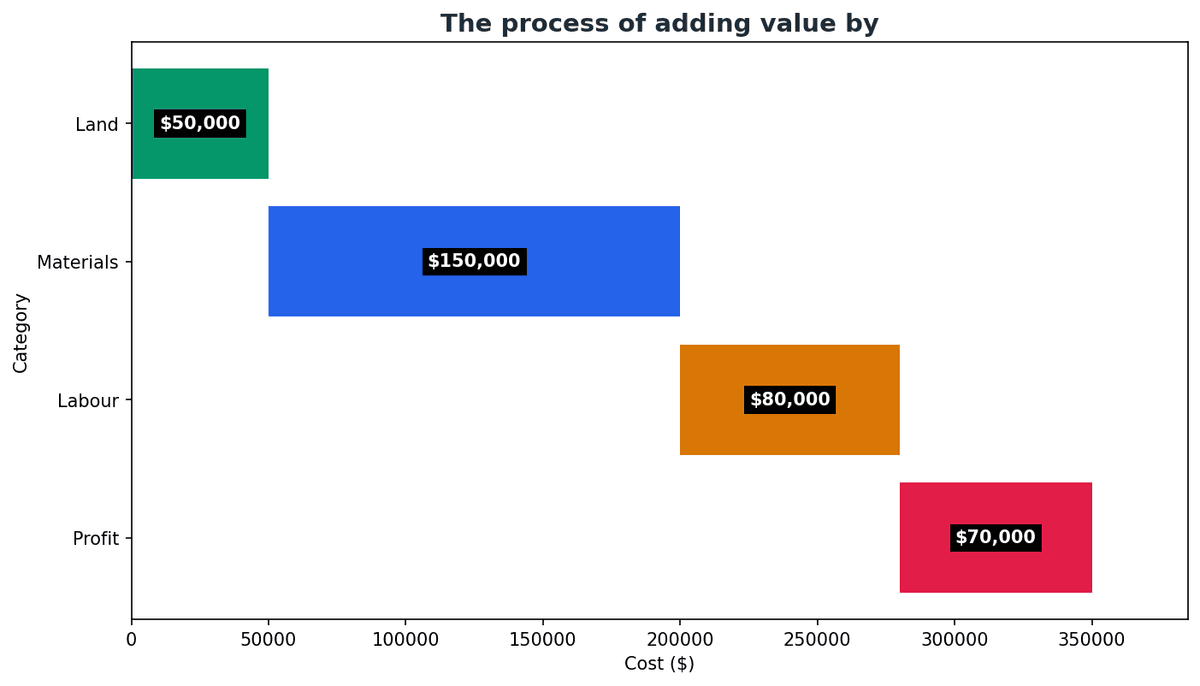
Fig 1.2 shows a flow diagram illustrating value addition in house building. (a) Calculate the profit margin (profit as a percentage of selling price) for the house building process shown in Fig 1.2. [2] (b) Explain how the 'Building Process' itself contributes to the added value, considering the costs and selling price in Fig 1.2. [3] (c) Evaluate the importance of managing 'Other Costs' effectively to maintain profitability, given the figures in Fig 1.2. [3]
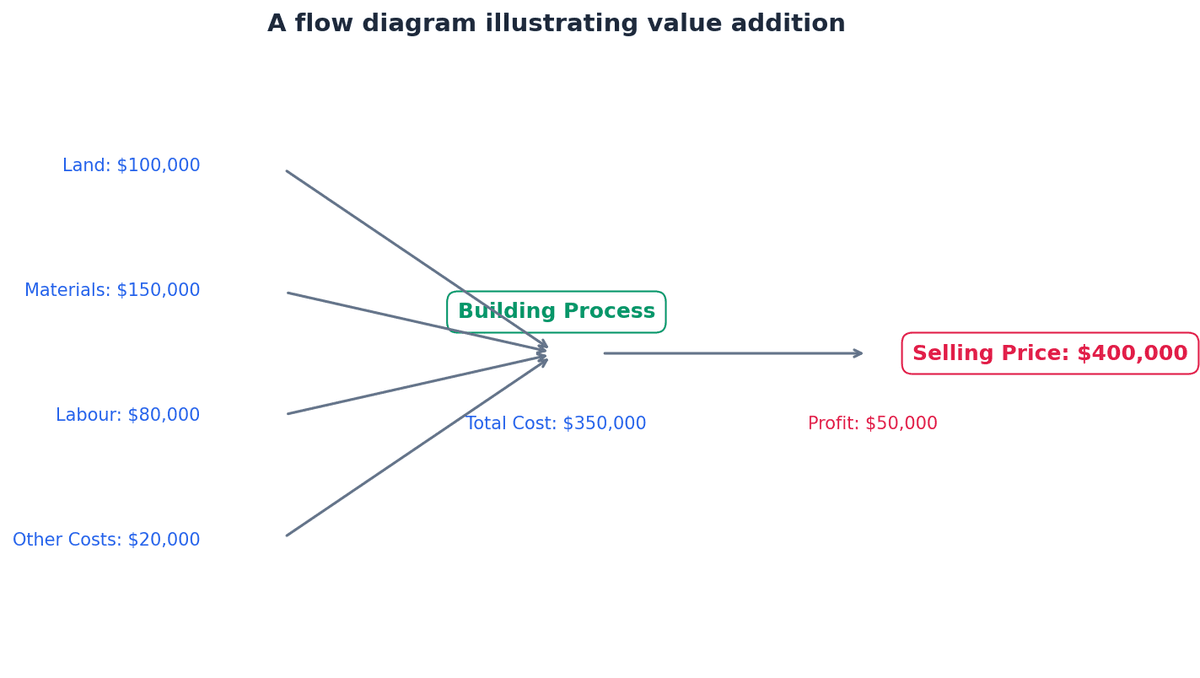
Fig 1.2 shows a flow diagram illustrating value addition in house building. (a) Calculate the percentage of the selling price that represents added value in the house building process shown in Fig 1.2. [2] (b) Analyse how a significant increase in 'Other Costs' (e.g., to $120,000) would impact the profit margin, assuming the selling price and material costs remain as shown in Fig 1.2. [3] (c) Suggest two strategies a business could employ to increase its added value, using the figures from Fig 1.2 as a reference point. [3]
The global business landscape is characterised by constant change, driven by technological advancements, shifts in consumer behaviour, and evolving economic conditions. Businesses that fail to recognise and adapt to these changes often face significant challenges. (a) Discuss the challenges faced by a business that fails to adapt to changes in the dynamic business environment. [6] (b) Assess the importance of market research and innovation for businesses operating in a rapidly changing environment. [6]
The rise of digital platforms has significantly altered how businesses operate and interact with customers. Many businesses now consider their physical presence in a different light. (a) Discuss how e-commerce businesses might mitigate the impact of high physical location costs. [5] (b) Assess the extent to which the 'best' location for a business is always the most expensive, considering different types of businesses. [5]
A local artisan soap maker, 'Bubble Bliss', has experienced fluctuating sales and cash balances. The owner admits to only sporadically updating their financial records. (a) Explain how poor record-keeping can lead to a lack of cash flow management. [4] (b) Calculate the total revenue from sales if 'Bubble Bliss' sold 500 units at $10 each, but due to poor record-keeping, could only accurately account for 450 units. [4]
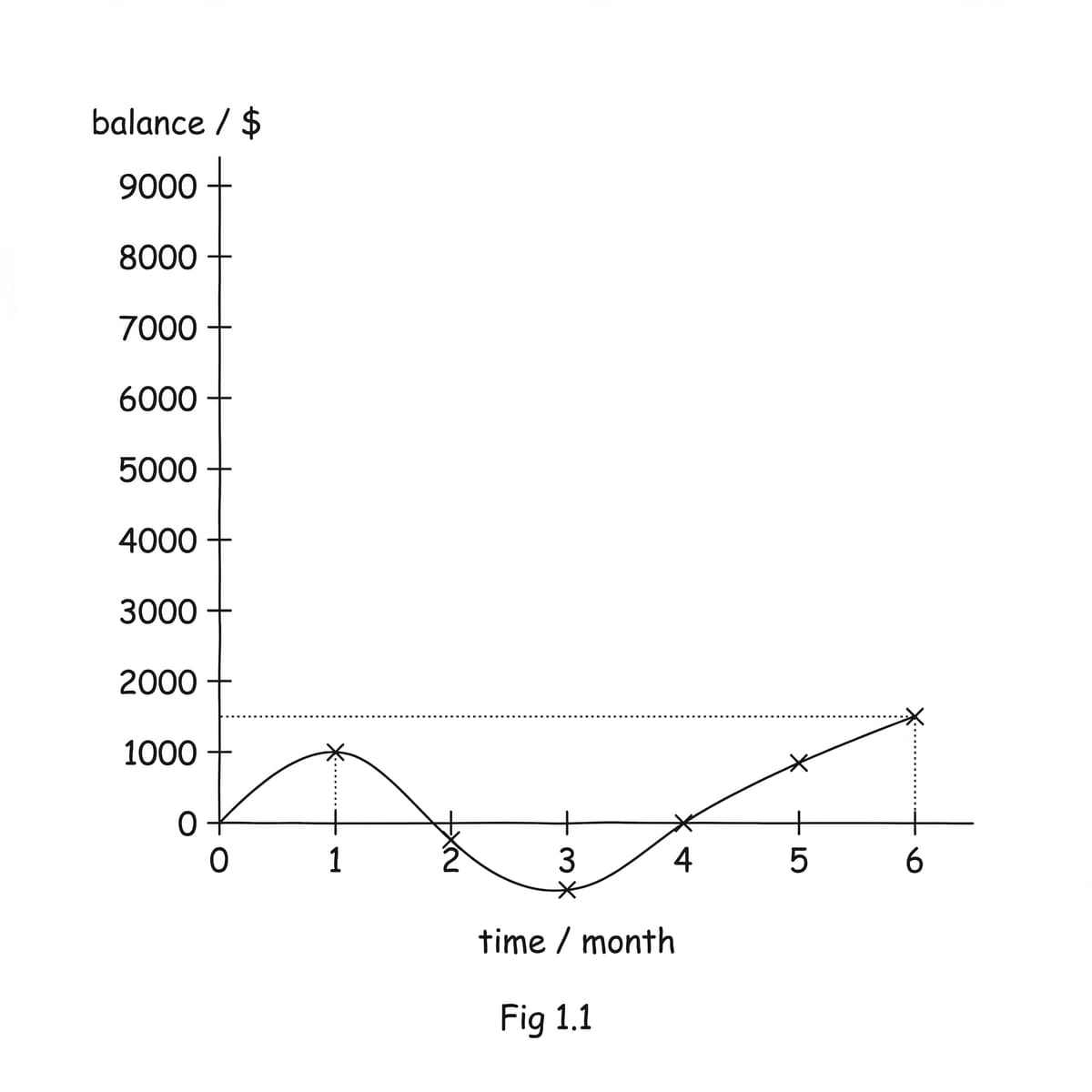
Strong financial management is crucial for the survival and growth of any business. Fig 1.2 shows a simplified cash flow projection for a new business over its first six months. (a) Analyse the role of strong financial management in ensuring the long-term success of a business, referencing the cash flow projection in Fig 1.2. [6] (b) Suggest one strategy a business could implement to improve its cash flow position based on Fig 1.2. [4]
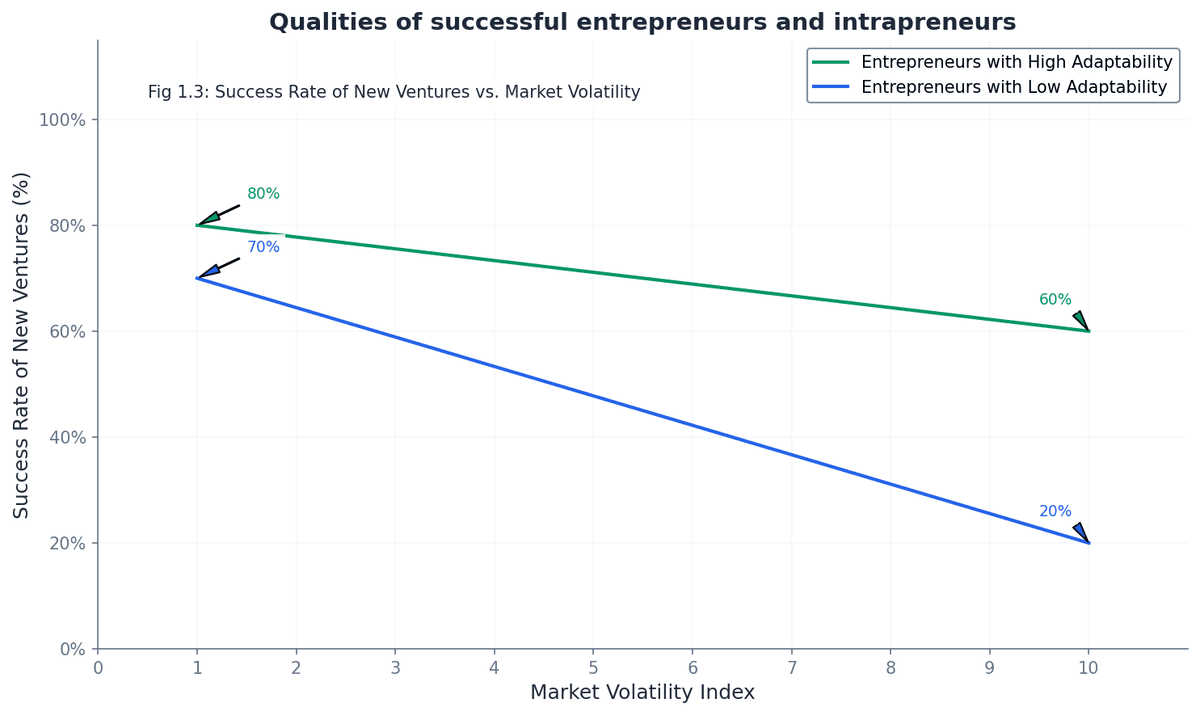
The business environment is constantly changing, requiring specific qualities from individuals launching new ventures. Fig 1.3 illustrates the success rates of new ventures based on the adaptability of their entrepreneurs in varying market conditions. (a) Analyse the data presented in Fig 1.3 to explain why 'adaptability' is considered a crucial quality for entrepreneurs. [4] (b) Suggest one other quality not shown in the graph that would be important for an intrapreneur. [3]
Identifying a viable business opportunity is a critical first step for any aspiring entrepreneur. However, sometimes this step can be challenging. (a) Define what is meant by 'lack of a business opportunity'. [2] (b) Give two reasons why a potential entrepreneur might perceive a lack of business opportunity in a specific market. [4]
A new start-up business is planning to launch a revolutionary artificial intelligence (AI) powered app for personalised fitness training. The sector is characterised by rapid innovation and intense competition. Evaluate the importance of market research for this new start-up business operating in a highly dynamic technological sector. [10]
Businesses operate in a constantly changing environment, influenced by various external factors. (a) Explain how technological advancements create both opportunities and threats for established businesses. [4] (b) Outline two strategies a business could adopt to respond effectively to changes in government legislation. [4]
A small independent bakery operates in a single town, serving only customers from the local community. In contrast, a large clothing retailer has stores across the country. (a) State one characteristic of a local business. [2] (b) Give two reasons why a national business might decide to expand into international markets. [4]
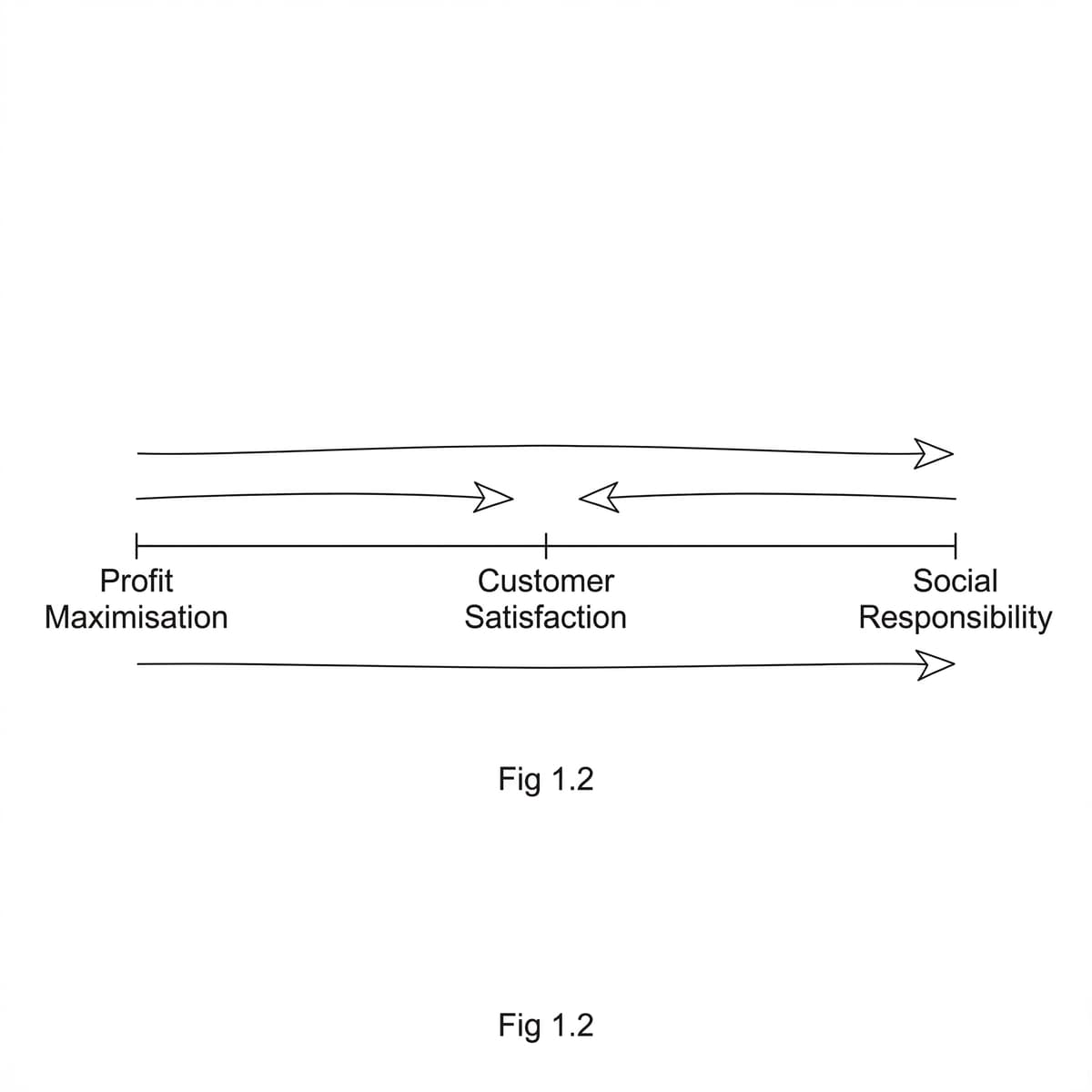
Businesses often pursue a range of objectives, which can sometimes lead to complex decisions. (a) Explain how meeting customer needs is fundamental to achieving a business's primary purpose. [4] (b) Discuss the potential conflicts that can arise when a business tries to achieve multiple objectives simultaneously, such as profit maximisation and social responsibility, referring to Fig 1.2 which illustrates these objectives on a continuum. [4]
A student, Alex, is considering starting a business selling custom-designed eco-friendly phone cases. He believes there's an unmet demand for stylish, sustainable phone accessories. (a) Explain how market research can help an entrepreneur like Alex identify a gap in the market. [4] (b) Describe two characteristics an entrepreneur needs to successfully fill a market gap. [4]
The business environment is constantly changing, requiring businesses to adapt to new trends and consumer behaviours. Fig. 1.1 illustrates a significant shift in how businesses interact with their customers over a 15-year period. (a) Identify two significant changes in the business environment shown in Fig. 1.1. [3] (b) Explain how one of the changes identified in part (a) might impact a traditional retail business. [5]

Many new businesses face significant challenges in their early years, often due to internal factors rather than just external market conditions. (a) Discuss how a lack of strategic planning skills by management can lead to business failure. [6] (b) Evaluate the importance of effective financial management skills for the long-term success of a start-up business. [6]
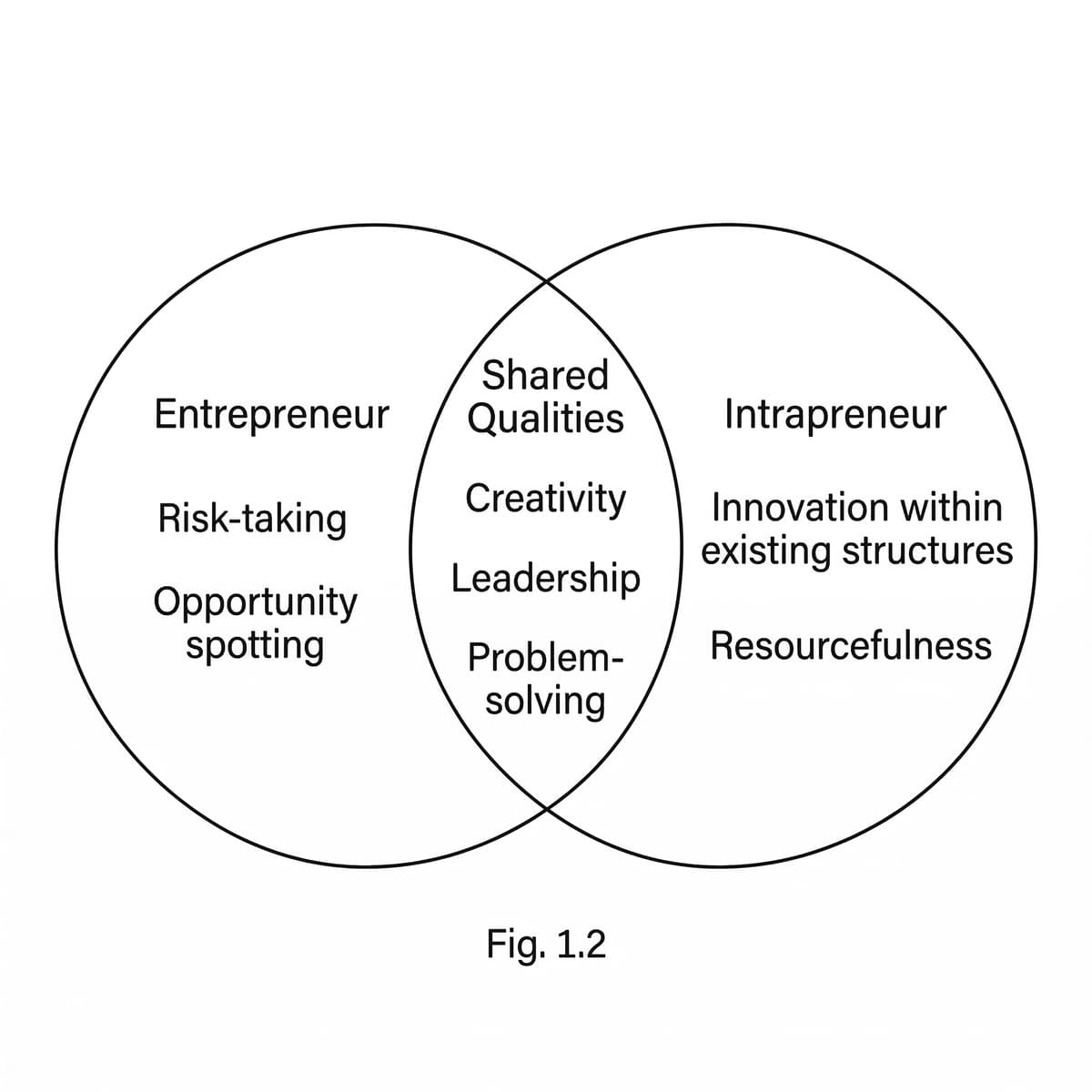
Successful individuals, whether starting their own ventures or driving innovation within established companies, often share a core set of personal qualities. These traits enable them to navigate uncertainty and deliver value. Fig. 1.2 presents a Venn diagram showing overlapping qualities of entrepreneurs and intrapreneurs. (a) Discuss how the qualities of risk-taking and innovation are crucial for both entrepreneurs and intrapreneurs. [6] (b) Assess whether adaptability or strong leadership is more important for a successful entrepreneur operating in a highly dynamic market. [6]
Identifying a viable business opportunity is crucial for the success of any new venture. Entrepreneurs often use various tools to assess market potential. (a) Explain how market research can help an entrepreneur identify a business opportunity. [4] (b) Describe two characteristics of a successful business opportunity. [4]
A newly established fashion retailer, 'EcoChic', aims to be profitable but also promotes ethical sourcing and sustainable production. The owners are debating whether to prioritise profit maximisation or their social responsibilities. Discuss the extent to which a business should prioritise profit maximisation over its social responsibilities. [10]
A new technology start-up, 'InnovateTech', is seeking significant investment to develop and launch its revolutionary artificial intelligence product. The founders have spent months preparing a comprehensive business plan to present to potential venture capitalists and angel investors. Evaluate the importance of a detailed business plan in convincing potential investors to provide sufficient capital for a new business venture. [10]
A small independent coffee shop is struggling to attract customers due to the presence of large international coffee chains in the same area. (a) Explain two strategies a small local business could use to differentiate itself from larger competitors. [4] (b) Outline how intense competition might lead to lower prices for consumers. [4]
Maria is an entrepreneur who recently launched a successful online tutoring platform. She attributes her success to her ability to adapt quickly to market changes and inspire her small team. (a) State two personal qualities commonly found in successful entrepreneurs. [2] (b) Give two examples of how an intrapreneur might demonstrate creativity within a large organisation. [4]
Many businesses face significant challenges, from global economic downturns to internal operational inefficiencies. For example, during a recent recession, several businesses struggled with declining consumer spending, while others failed due to poor inventory management. Evaluate the extent to which external economic factors are more significant than internal management issues in causing business failure. [10]
A new start-up, 'TechGadgets Ltd.', has prepared a cash flow forecast for its first six months of operation to manage its finances. Fig 1.1 shows this cash flow forecast. **Fig 1.1: Cash Flow Forecast for TechGadgets Ltd. (All values in $)**
| Month | Opening Balance | Cash Inflows | Cash Outflows | Net Cash Flow | Closing Balance |
|---|---|---|---|---|---|
| 1 | 0 | 5000 | 4000 | 1000 | 1000 |
| 2 | 1000 | 6000 | 7500 | ||
| 3 | 7000 | 8000 | |||
| 4 | 8500 | 7000 | |||
| 5 | 9000 | 8200 | |||
| 6 | 9500 | 8800 |
(a) Calculate the net cash flow for months 2 and 4 from the cash flow forecast shown in Fig 1.1. [4] (b) Analyse the cash flow position of the business over the six-month period shown in Fig 1.1. [3] (c) Suggest one way the business could improve its cash flow in month 3. [3]
The government of Country X is encouraging new business start-ups to boost its economy. (a) Define the term 'enterprise'. [2] (b) Identify two ways enterprise contributes to a country's economic development. [4]