Polynomial division is a fundamental operation in algebra, allowing us to break down complex polynomials into simpler parts. (a) State the division algorithm for polynomials. [2] (b) Perform the division of x^2 + 5x + 6 by x + 2, stating the quotient. [3]
Fig 1.4 shows a polynomial long division setup. a) Identify the quotient polynomial from the long division shown in Fig 1.4. b) Calculate P(-2) for P(x) = x^3 + 4x^2 - 11x + 6. c) Deduce the remainder when P(x) is divided by (x + 2) using the Remainder Theorem and compare it with the calculation in part (b). d) Formulate the expression P(x) = D(x)Q(x) + R(x) using the polynomials shown in Fig 1.4, where D(x) is the divisor, Q(x) is the quotient, and R(x) is the remainder.
A student is analysing the intersection points of a modulus function and a linear function. (a) Sketch the graphs of y = |2x + 1| and y = x + 2 on the same axes, showing the coordinates of any intercepts with the axes and the vertices. [6] (b) Solve the equation |2x + 1| = x + 2 using your sketch. [4]
A polynomial P(x) is defined as P(x) = Ax^3 + Bx^2 - 5x + 1. (a) Given that P(x) leaves a remainder of 7 when divided by (x - 1) and a remainder of -1 when divided by (x + 1), solve for the constants 'A' and 'B'. [8] (b) Interpret the meaning of these constants in the context of the polynomial's behavior at x = 1 and x = -1. [4]
Fig 1.5 shows the graph of y = |x - 4| and the line y = 2x + 1. a) Read the y-intercept of the line y = 2x + 1 from Fig 1.5. b) Determine the y-intercept of the graph y = |x - 4|. c) Explain why the graph of y = |x - 4| has a 'V' shape with its vertex on the x-axis, referring to the definition of the modulus function.
Modulus inequalities are frequently encountered in various fields of mathematics and engineering to define ranges or bounds. Consider the inequality involving two modulus functions. (a) Solve the inequality |3x + 4| ≥ |x - 2|. [8] (b) Discuss a common misconception when squaring both sides of a modulus inequality. [3]
A polynomial P(x) is given by P(x) = x^3 + ax^2 + bx - 6. It is known that P(x) is exactly divisible by (x - 1) and (x + 2). (a) Find the values of a and b. [6] (b) Deduce the quotient when the polynomial with these values of a and b is divided by (x - 1)(x + 2). [4]
Fig 1.4 shows a polynomial long division of x^3 + 4x^2 - 11x + 6 by x - 1. (a) Identify the divisor that results in a zero remainder in Fig 1.4. (b) State the value of c such that (x - c) is a factor of x^3 + 4x^2 - 11x + 6, based on Fig 1.4. (c) Show that P(c) = 0 for the value of c found in part (b), where P(x) = x^3 + 4x^2 - 11x + 6.
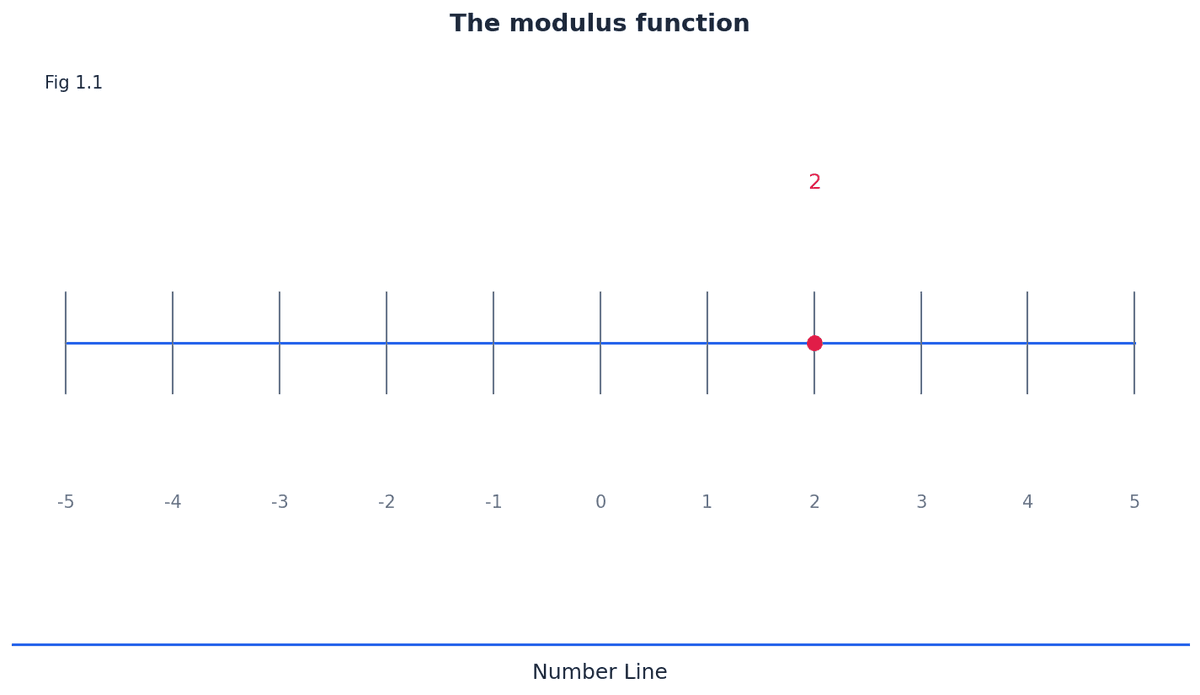
Fig 1.1 shows a number line with the number 2 marked. This number line can be used to interpret and represent solutions to inequalities involving the modulus function. (a) Interpret the inequality |x - 2| < 3 on the number line shown in Fig 1.1. [4] (b) Shade the region on the number line that represents the solution to |x - 2| < 3. [3]
A mathematician is analysing the conditions under which certain functions are defined, leading to modulus inequalities. (a) Solve the inequality |2x + 1| ≥ 5. [5] (b) Express the solution in interval notation. [2]
Fig 1.5 shows the graph of y = |x - 4| and the line y = 2x + 1. (a) Determine the gradient of the line y = 2x + 1 shown in Fig 1.5. [2] (b) Calculate the gradient of the right branch of y = |x - 4| for x > 4. [3] (c) Compare the gradients found in parts (a) and (b) and explain why there is only one intersection point shown in Fig 1.5. [2] (d) Justify why the line y = 2x + 1 does not intersect the left branch of y = |x - 4| (for x < 4) based on their gradients and y-intercepts. [3]
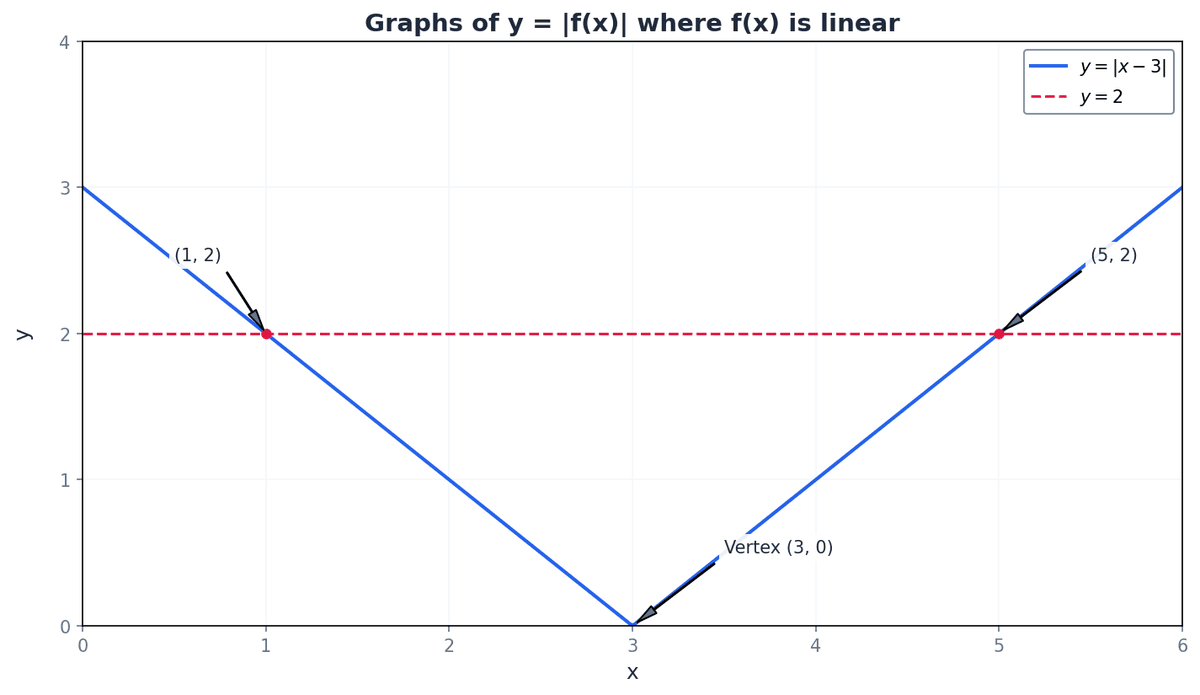
Fig 1.1 shows the graph of y = |x - 3|. (a) Use the graph in Fig 1.1 to estimate the solutions to |x - 3| = 2. [5] (b) Find the exact solutions to |x - 3| = 2 using algebraic methods. [4]
Consider the modulus inequality |2x - 4| > x + 1. (a) Sketch the graph of y = |2x - 4| on a coordinate plane, clearly showing its vertex and intercepts. [4] (b) Solve the inequality |2x - 4| > x + 1 algebraically. [4]
Fig 1.6 shows the graphs of y = |2x - 1| and y = |x + 2|. (a) Identify the x-coordinates of the intersection points of y = |2x - 1| and y = |x + 2| from Fig 1.6. (b) Write down the inequality represented by the region where the graph of y = |2x - 1| is below the graph of y = |x + 2|. (c) Solve the equation 2x - 1 = x + 2 algebraically to confirm one of the intersection points identified in part (a). (d) Explain how the solution to |2x - 1| < |x + 2| can be deduced from the intersection points and the relative positions of the graphs in Fig 1.6.
Fig 1.3 shows the graph of y = |2x - 5| and the horizontal line y = 3. a) Identify the coordinates of the vertex of the graph y = |2x - 5| from Fig 1.3. b) Calculate the area of the triangle formed by the graph y = |2x - 5| and the x-axis between x = 1 and x = 4. c) Determine the y-intercept of the graph y = |2x - 5|. d) State the gradient of the line segment of y = |2x - 5| for x < 2.5.
Fig 1.4 shows a polynomial long division setup. (a) Identify the divisor used in the polynomial long division shown in Fig 1.4. [1] (b) State the remainder when x^3 + 4x^2 - 11x + 6 is divided by the identified divisor, as shown in Fig 1.4. [2] (c) Use the Remainder Theorem to show that P(1) equals the remainder found in part (b), where P(x) = x^3 + 4x^2 - 11x + 6. [3] (d) Find the value of P(0) and relate it to the constant term of the polynomial. [2]
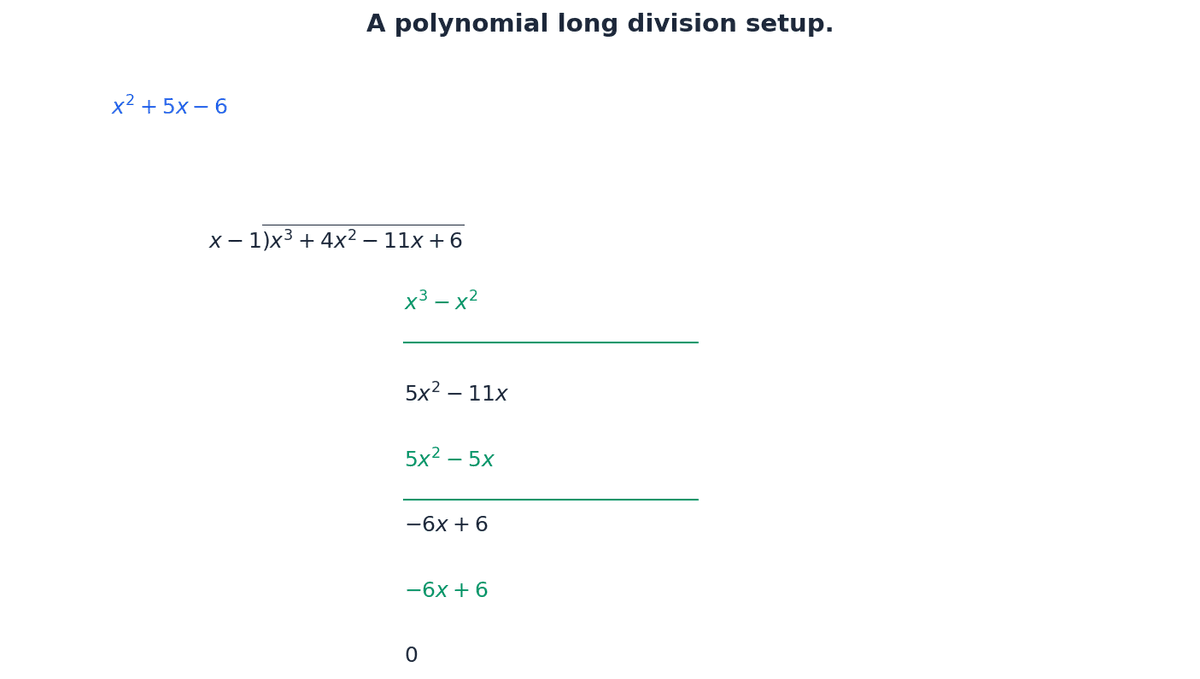
Fig 1.5 shows the graph of y = |x - 4| and the line y = 2x + 1. (a) Read the x-coordinate of the intersection point of y = |x - 4| and y = 2x + 1 from Fig 1.5. (b) Determine the exact value of the y-coordinate at the intersection point by substituting the x-coordinate found in part (a) into y = 2x + 1. (c) Show algebraically that solving x - 4 = -(2x + 1) leads to an extraneous root that is not shown in Fig 1.5.
Fig 1.1 shows the graph of y = |x - 1/2|. a) Identify the x-intercept of the graph in Fig 1.1. b) State the coordinates of the point where the graph meets the y-axis. c) Calculate the exact value of y when x = -1, using the equation of the reflected part of the graph.
Fig 1.4 shows a polynomial long division setup. (a) Identify the divisor polynomial shown in the long division setup in Fig 1.4. (b) State the quotient polynomial from the long division shown in Fig 1.4. (c) Perform the first step of the polynomial long division by subtracting x^2(x - 1) from the dividend shown in Fig 1.4, and show the resulting polynomial. (d) Write down the remainder from the long division in Fig 1.4.
An engineer is designing a control system where the tolerance for two variables, x and y, must satisfy certain conditions expressed as modulus inequalities. (a) Solve the inequality |x - 3| < |2x + 1|. [6] (b) Verify if x = -5 satisfies the inequality. [2]
Fig 1.3 shows the graph of y = |2x - 5| and a horizontal line. (a) Determine the vertex of the graph y = |2x - 5| from Fig 1.3. [2] (b) Sketch the graph of y = 2x - 5 without the modulus function, clearly indicating the part that is reflected to form y = |2x - 5|. [3] (c) Show algebraically how one of the intersection points in Fig 1.3 is found by solving 2x - 5 = 3. [2] (d) State the interval of x for which |2x - 5| ≥ 3, using the information from Fig 1.3. [2]
Fig 1.6 shows the graphs of y = |2x - 1| and y = |x + 2|. (a) Determine the y-coordinate of the intersection point at x = 3 by substituting x = 3 into either equation shown in Fig 1.6. [3] (b) Solve the equation |2x - 1| = |x + 2| algebraically by squaring both sides to find the exact x-coordinates of both intersection points. [3] (c) Compare the graphical solution for |2x - 1| > |x + 2| from Fig 1.6 with the algebraic solution obtained in part (b). [3] (d) Deduce the range of x for which |2x - 1| < |x + 2| and justify your answer using the graphical information from Fig 1.6. [3]
Consider the graph of y = |2x - 4|. (a) Analyse the transformation from the graph of y = x to the graph of y = |2x - 4|. Describe the sequence of transformations. [6] (b) Determine the area of the region bounded by the graph of y = |2x - 4|, the x-axis, and the lines x = 0 and x = 4. [3] (c) Sketch the graph of y = -|2x - 4|, showing the coordinates of the vertex and any intercepts with the axes. [3]
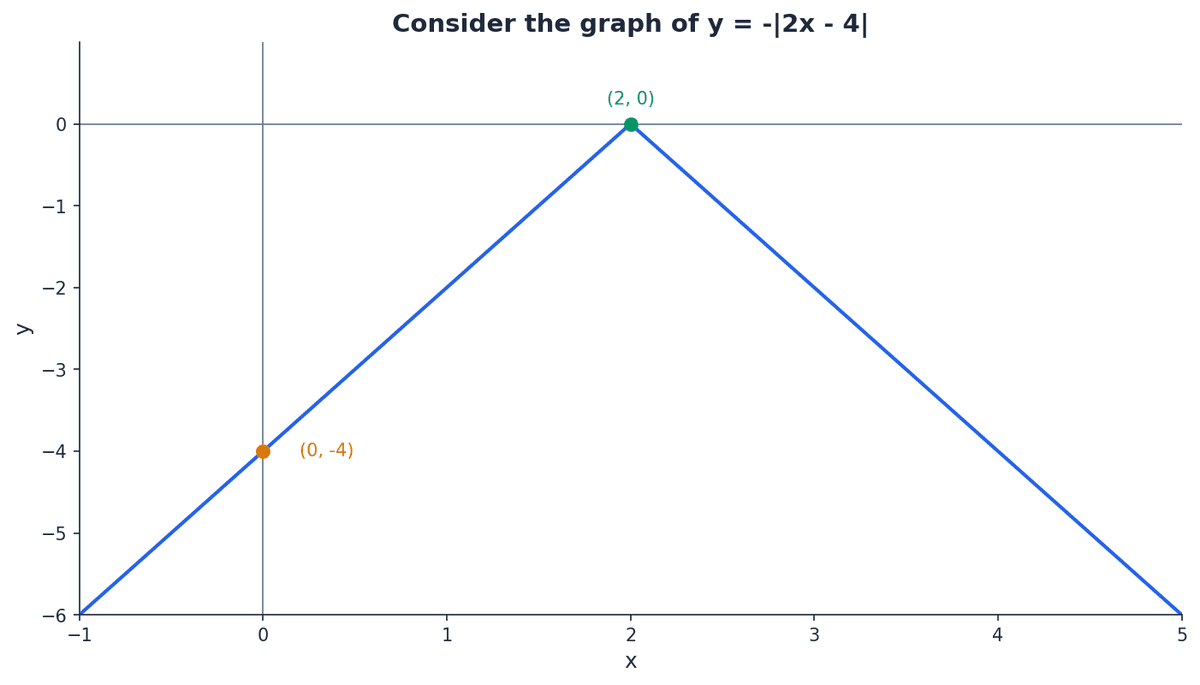
Fig 1.1 shows the graph of y = |x^2 - 4|. This graph illustrates the behaviour of a modulus function applied to a quadratic expression. (a) Identify the coordinates of the vertex and the x-intercepts of the graph y = |x^2 - 4| shown in Fig 1.1. [4] (b) Solve the equation |x^2 - 4| = 5 using the graph. [3] (c) Describe how the graph of y = |x^2 - 4| relates to the graph of y = x^2 - 4. [3]
Graphs of modulus functions are characterised by their 'V' shape, and their domain can be restricted. (a) Draw the graph of y = |2x - 4| for -1 ≤ x ≤ 5, clearly labelling the x and y intercepts. [4] (b) State the range of y for the given domain. [2]
The graph of a modulus function has a distinctive 'V' shape. (a) Sketch the graph of y = |x + 2|, showing the coordinates of the vertex and the y-intercept. [3] (b) Identify the gradient of each linear part of the graph. [2]
Modulus functions can be represented graphically, and their intersections can indicate solutions to equations. (a) Sketch the graphs of y = |x - 2| and y = |2x - 1| on the same set of axes, labelling any intercepts and vertices. [5] (b) Determine the x-coordinates of the intersection points of these two graphs from your sketch. [4]
A student is learning about modulus functions and needs to solve inequalities involving them. (a) State the property for |x| < a. [2] (b) Solve the inequality |3x - 2| < 7. [3]
Modulus inequalities can be represented on a number line. (a) Interpret the meaning of |x - a| < b graphically, using Fig 1.2. [3] (b) Solve the inequality |2x + 3| ≤ 5 algebraically. [4] (c) Illustrate the solution from part (b) on a number line. [2]
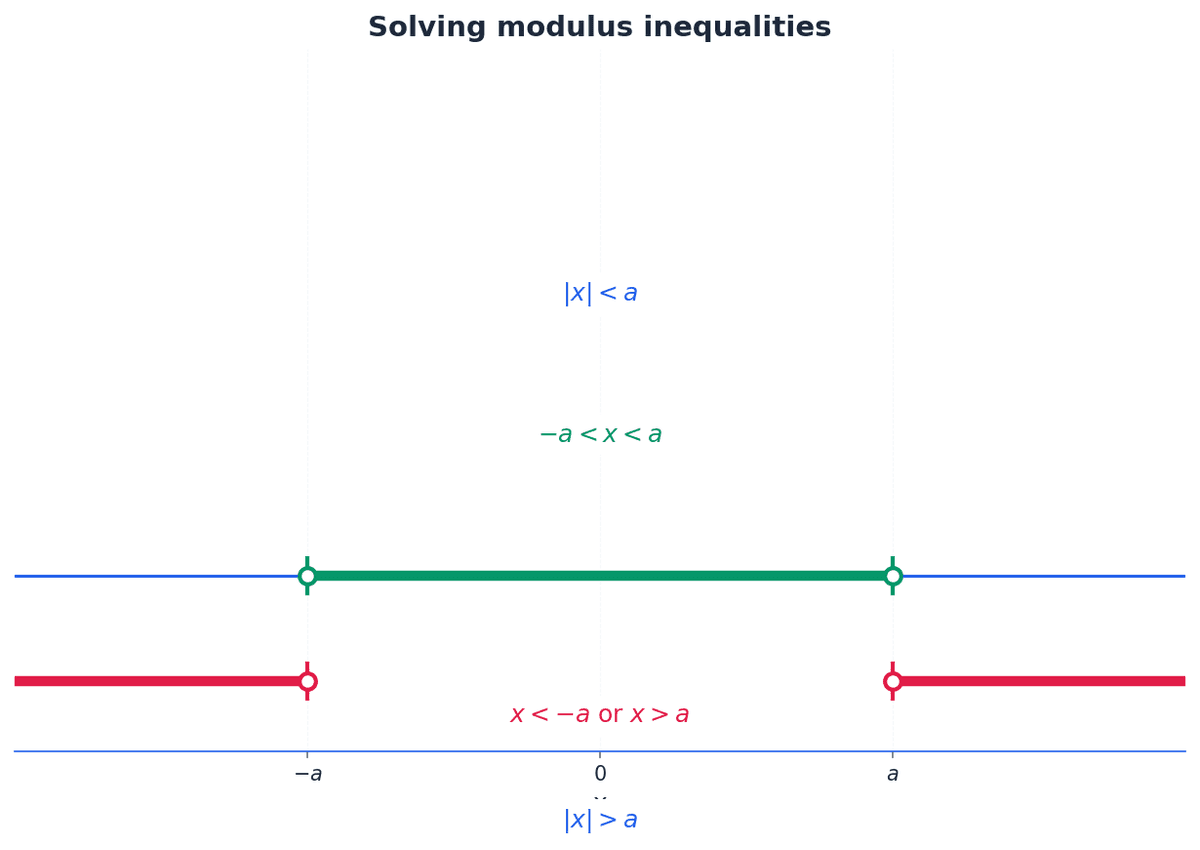
Fig 1.2 shows the graph of y = |2x - 1| and the horizontal line y = 3. (a) Read the x-coordinates of the intersection points of y = |2x - 1| and y = 3 from Fig 1.2. (b) State the equation of the line that forms the right branch of y = |2x - 1|. (c) Verify that one of the x-coordinates found in part (a) satisfies the equation 2x - 1 = 3.
Fig 1.2 shows the graph of y = |2x - 1| and the horizontal line y = 3. (a) Identify the coordinates of the vertex of the graph y = |2x - 1| from Fig 1.2. [2] (b) Determine the exact values of x where y = |2x - 1| intersects y = 3, by solving the equation 2x - 1 = 3 and -(2x - 1) = 3. [3] (c) Solve the equation |2x - 1| = x + 1 graphically by adding the line y = x + 1 to Fig 1.2 and estimating the intersection points. [3] (d) Explain why a horizontal line y = k, where k < 0, would have no intersection points with the graph y = |2x - 1| shown in Fig 1.2. [4]
Fig 1.3 shows the graph of y = |2x - 5| and the horizontal line y = 3. (a) Identify the x-coordinates of the intersection points of y = |2x - 5| and y = 3 from Fig 1.3. (b) Write down the range of x values for which |2x - 5| < 3, based on Fig 1.3. (c) Solve the inequality 2x - 5 < 3 algebraically to confirm one boundary of the solution.
Fig 1.4 shows a polynomial long division setup. (a) Identify the dividend polynomial from the long division shown in Fig 1.4. [1] (b) Calculate the value of the dividend polynomial at x = 1. [3] (c) Explain the relationship between the remainder found in Fig 1.4 and the value calculated in part (b), referencing the Remainder Theorem. [3] (d) Predict what the remainder would be if the dividend was x^3 + 4x^2 - 11x + 7 and the divisor remained x - 1. [3]
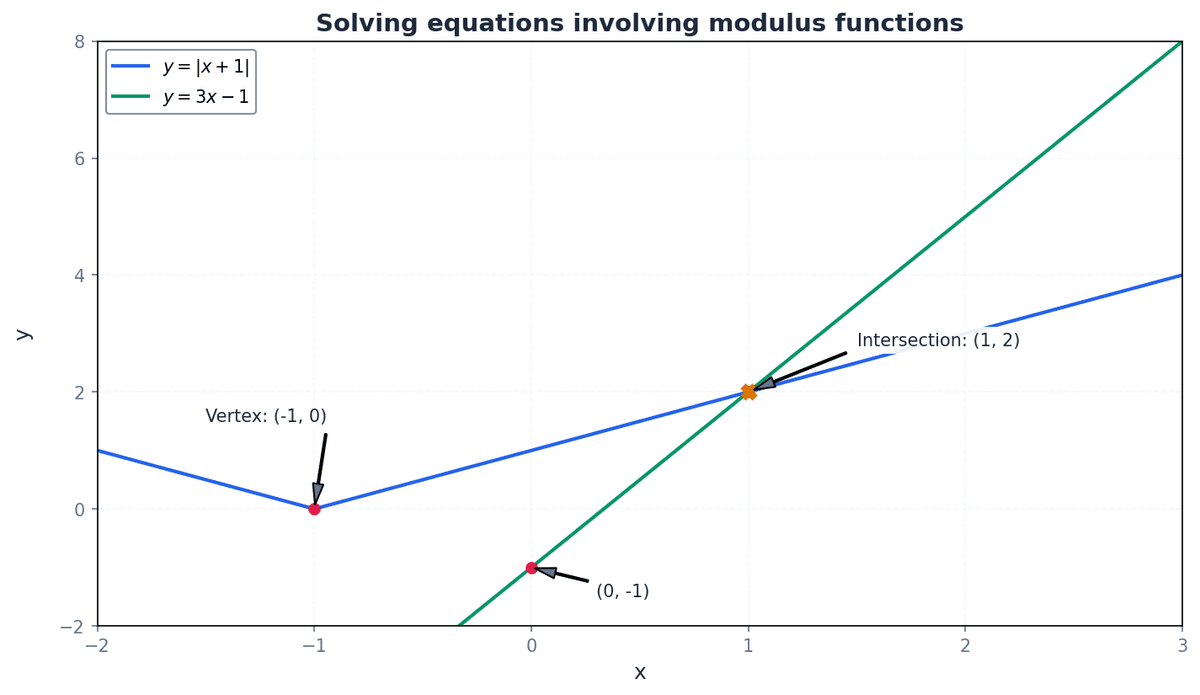
Fig 1.1 shows the graphs of y = |x + 1| and y = 3x - 1 on the same set of axes. These graphs can be used to visually identify solutions to modulus equations. (a) Read the x-coordinate of the intersection point of the graphs y = |x + 1| and y = 3x - 1 from Fig 1.1. [4] (b) Confirm your reading by solving the equation |x + 1| = 3x - 1 algebraically. [3]
A student is exploring graphical methods to solve inequalities involving modulus functions. (a) Sketch the graphs of y = |x - 2| and y = 4 on the same axes. Clearly label any intercepts with the axes and the vertex of the modulus function graph. [4] (b) Use your graph to determine the solution to the inequality |x - 2| < 4. [6]
Fig 1.7 shows the definition of the modulus function. (a) Apply the definition from Fig 1.7 to write |2 - 5| without the modulus sign. [2] (b) Calculate the value of |(-3)^2 - 10|. [2] (c) Explain why |x| = |-x| for any real number x, using the definition in Fig 1.7. [2] (d) Determine the values of x for which |x - 3| = x - 3, based on the definition in Fig 1.7. [2]
Fig 1.1 shows the graph of y = |x - 1/2|. (a) State the equation of the line that is reflected to form the graph y = |x - 1/2| for x < 1/2. [1] (b) Determine the y-coordinate when x = 0 on the graph shown in Fig 1.1. [2] (c) Sketch the graph of y = x - 1/2 on the same axes as Fig 1.1, showing how it relates to y = |x - 1/2|. [3] (d) Calculate the total length of the graph segment shown in Fig 1.1 from x = 0 to x = 1. [3]
A student is investigating the properties of modulus functions. (a) Sketch the graph of y = |3x - 6|, showing the coordinates of the vertex and any intercepts with the axes. [4] (b) Determine the values of x for which |3x - 6| = 3. [4]
Fig 1.2 shows the graph of y = |2x - 1| and a straight line intersecting it. (a) Identify the equation of the straight line intersecting y = |2x - 1| in Fig 1.2. [1] (b) Read the y-coordinate of the intersection points from Fig 1.2. [2] (c) Verify that the x-coordinate x = -1 satisfies the equation |2x - 1| = 3. [2] (d) Discuss how the symmetry of the graph y = |2x - 1| explains the two intersection points with y = 3 shown in Fig 1.2. [3]
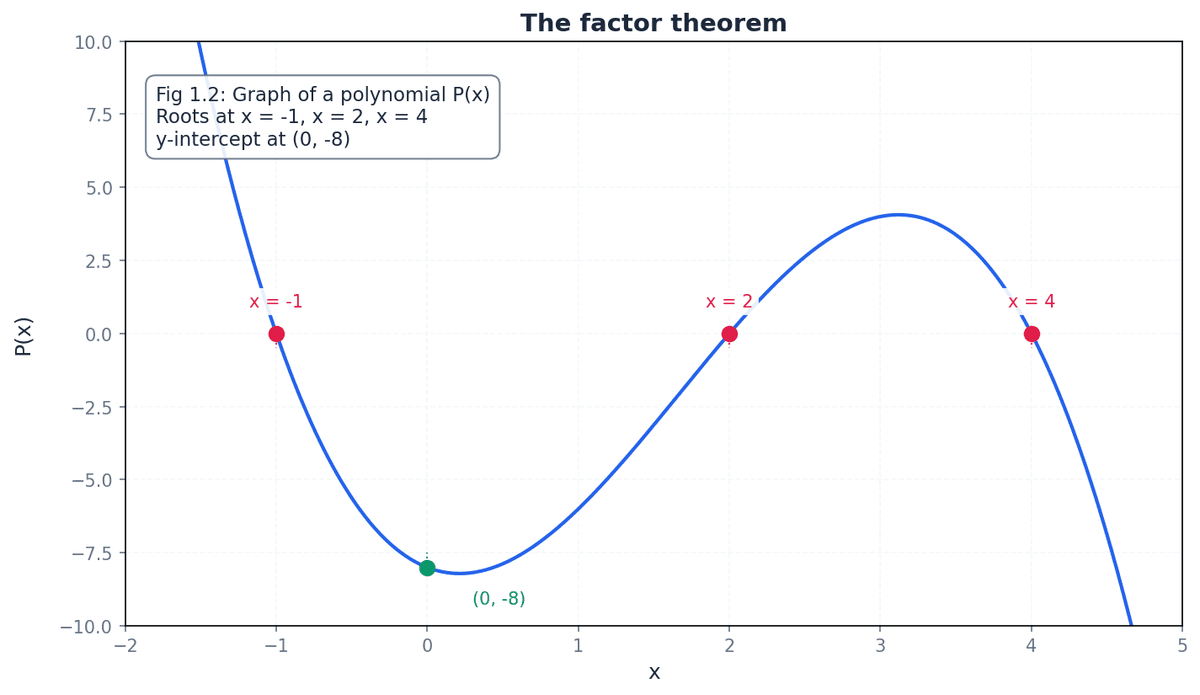
The graph of a polynomial P(x) is shown in Fig 1.2. (a) Identify the x-intercepts of the graph of P(x) in Fig 1.2. [2] (b) Explain how the factor theorem relates to these x-intercepts. [2] (c) Check if x = 0 is a factor of P(x). [2]